




Healthy Homes, Safer Futures: How an Informal Settlement Community in Mirpur Took Health Into Its Own Hands
Posted by Mohammad Azharul Islam, Ahsan Habib Saimon • April 1, 2026
This initiative was designed, led, and implemented by Mohammad Azharul Islam and Ahsan Habib Saimon as part of the Climate Resilience Fellowship – a joint initiative by HOT’s Open Mapping Hub - Asia-Pacific and World Vision Bangladesh, funded by NetHope.
Duaripara: Where Every Rainy Season Brings a New Threat
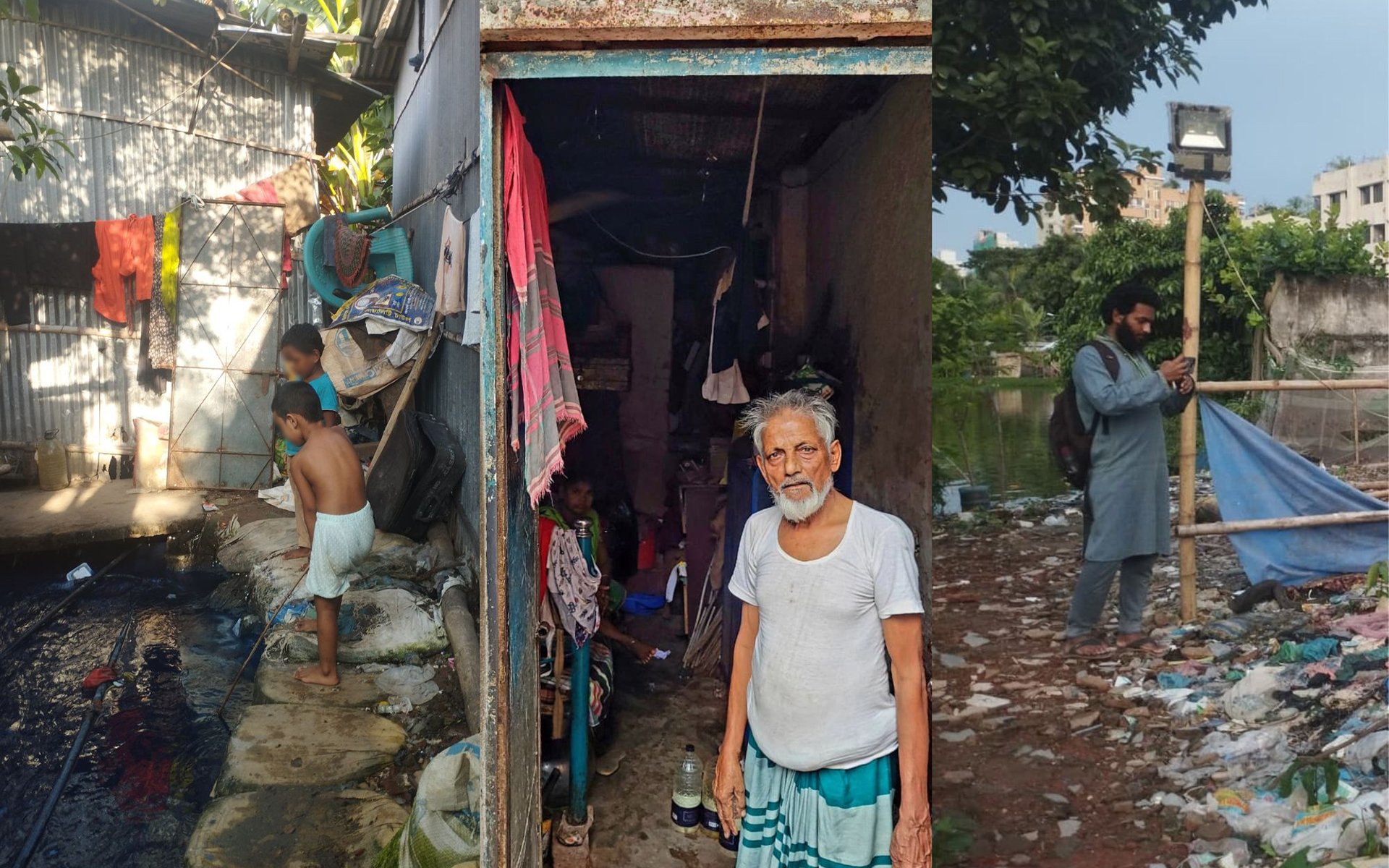
I was surprised by the smell when I initially visited Duaripara. Before the small alleys appeared, it struck: a mixture of open sewers, moist ground, and something harder to identify. There were kids playing in a narrow passageway that could hardly accommodate two individuals. Beside a sluggish creek, a lady was doing laundry. An old guy sat in a doorframe, silently observing us.
Duaripara is a slum settlement in Mirpur-12, one of Dhaka’s most densely populated districts. Like thousands of similar neighborhoods across the city, it is home to low-income residents who have come from Bangladesh, garment workers, rickshaw pullers, domestic laborers, and people displaced from rural areas by floods, river erosion, and the slow creep of climate change. They came looking for a better life. What many found was a different kind of hardship.
It is hard to exaggerate the quality of life here. Sunlight seldom reaches the ground in tin-roofed buildings because they are so tightly spaced. Numerous households use shared latrines. Trash gathers in drains and corners. Additionally, those drains overflow each year during the monsoon season, mixing rainwater, trash, and sewage into streets that flood rapidly and drain slowly.
Around Duaripara, Mirpur-12, Dhaka | Photo: Syed Imam
The health consequences are predictable and devastating. Across Dhaka’s informal settlements, approximately 34% of residents suffer from some form of infectious illness (Rahaman et al., 2023). Diarrhea, dengue, respiratory infections, and skin diseases are not occasional misfortunes here; they are part of the seasonal rhythm of life. Women, children, and the elderly carry the heaviest burden. Frequent illness disrupts children’s schooling, prevents adults from working, and drains already-stretched household incomes.
What makes this especially painful is how preventable it is. Many of these diseases can be significantly reduced through basic hygiene practices: proper handwashing, safe water handling, and household cleanliness. But in communities with few health education infrastructures, limited WASH facilities, and no one coming to teach, knowledge gaps become disease vectors. This was the situation we walked into in April 2025.
Building Knowledge, Block by Block
Our project, Healthy Homes, Safer Futures, was built on a simple conviction: that lasting health behavior change cannot be dropped from above. It must grow from within the community, supported by local knowledge and real relationships.
With a budget of $1,000 USD and six months on the clock, we designed a community-led health and hygiene capacity-building initiative targeting Duaripara’s residents, with a particular focus on women, youth, and marginalized groups, including people with disabilities.
Listening Before Acting
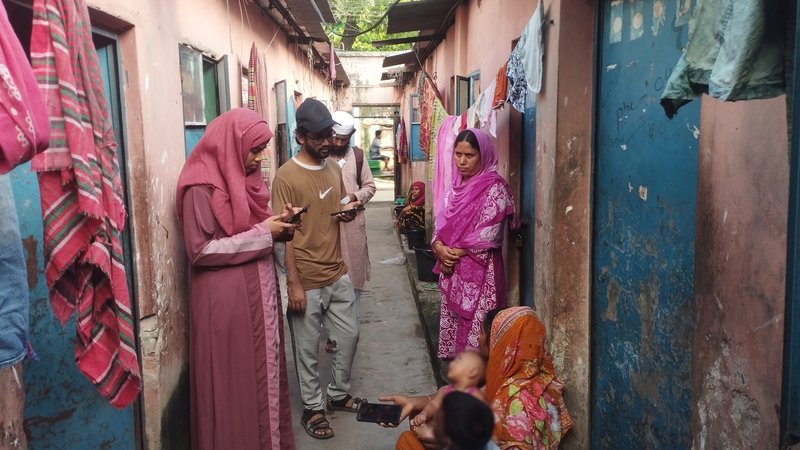
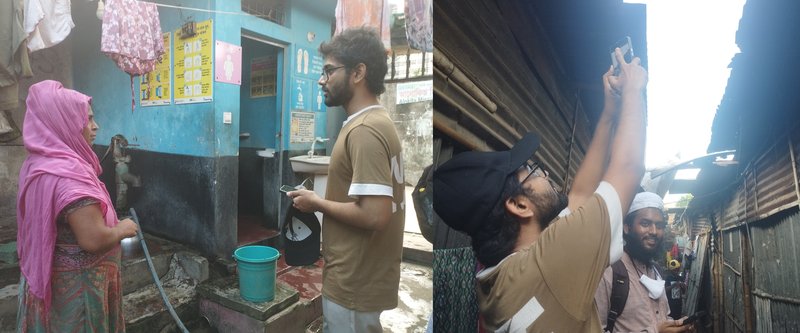
Listening Before Acting in Duaripara using open mapping tools | Photo: Syed Imam
We began not with training sessions, but with conversations. Moving through the settlement, we asked questions: What illnesses are most common here? When does flooding happen? Where does waste go? Who in this community is most at risk?
What we heard confirmed what the data already suggested, but it also told us something numbers cannot capture. The problems were not just about infrastructure. They were about invisibility. Residents felt that no one was paying attention to their health needs. Women in particular described carrying the burden of managing household hygiene with almost no support or recognition.
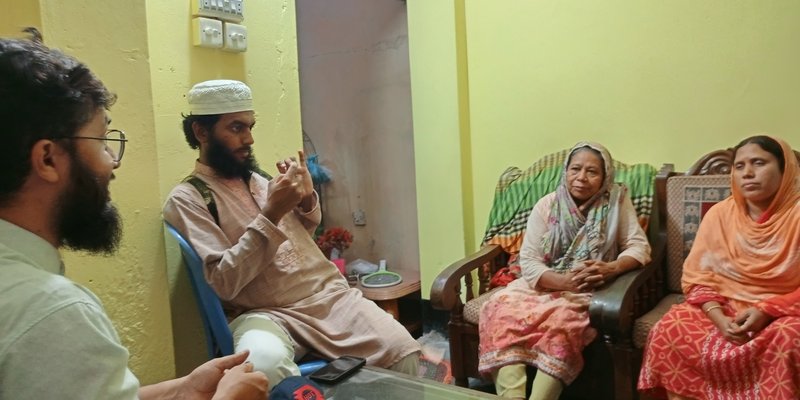
Discussion session with community members | Photo: Syed Imam and Rownok Sardar
Putting Duaripara on the Map
One of our first concrete steps was participatory mapping. Using KoboToolbox, we worked with 6 local volunteer mappers to document existing facilities and risks in Duaripara. This included water points, latrines, waste collection areas, health facilities, and flood-prone zones.
We mapped 155 amenities across the settlement — more than three times our original target of 50. For a community that had been largely invisible on digital maps, this was no small thing. A neighborhood that does not exist in official datasets cannot be planned for, funded, or adequately served. Now it can be.
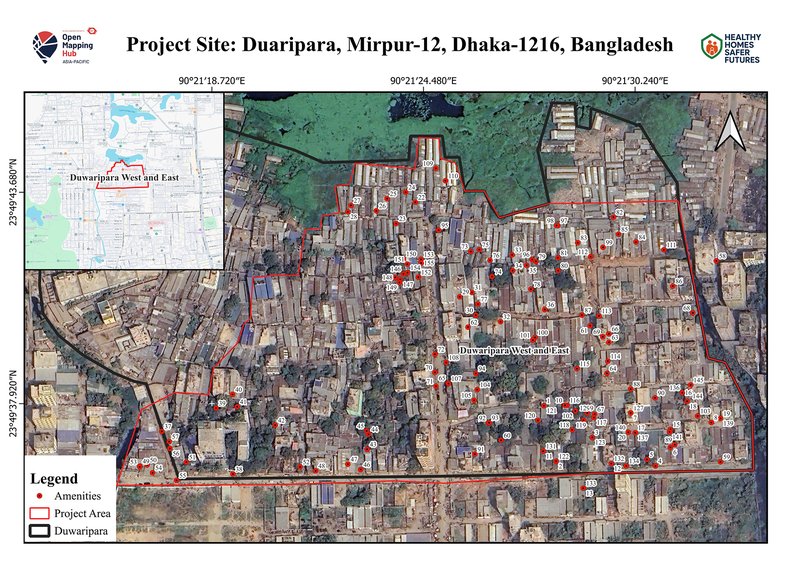
Map of Duaripara, Mirpur-12 showing 155 mapped amenities, including water points, sanitation facilities, and community infrastructure | Map visualization: Mohammad Azharul Islam
Training That Respected People’s Lives
After participatory mapping, we held targeted health and hygiene training sessions for community members, covering handwashing, disease prevention, safe food handling, and the connections between environmental conditions and illness. We made sure our approach was inclusive: sessions were timed around women’s household schedules, language was kept accessible, and safe spaces were created so that people with disabilities could participate fully.
In total, 22 people were directly trained, exceeding our target of 20. More importantly, through these participants, we estimate that over 8,200 people were indirectly reached as knowledge spread through households, families, and neighbors.
We also paid careful attention to who was in the room. Eighty percent of participants were women, and sixty percent were youth, the two groups most likely to translate hygiene knowledge into lasting household change, yet most historically excluded from community health decisions.
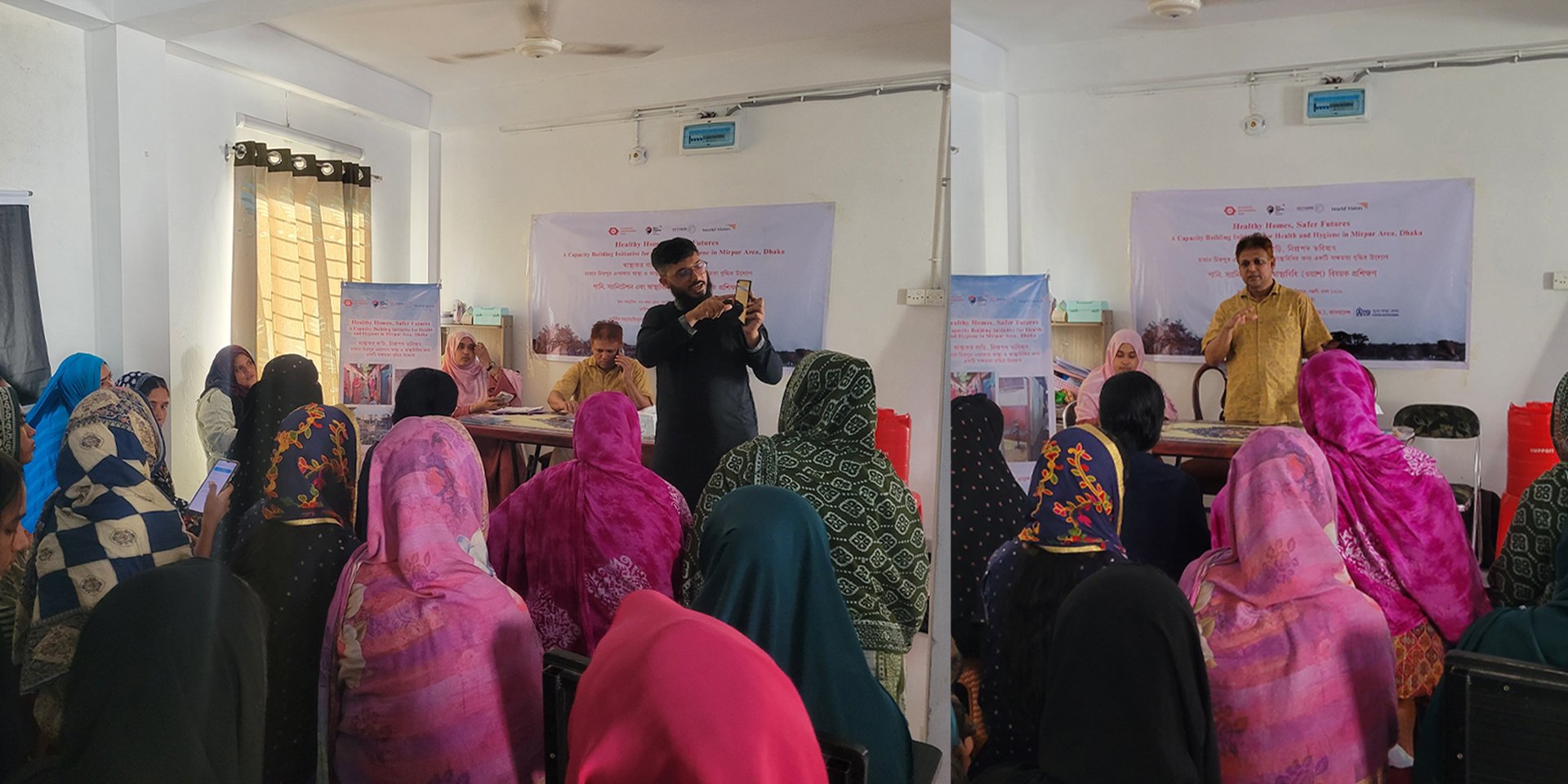
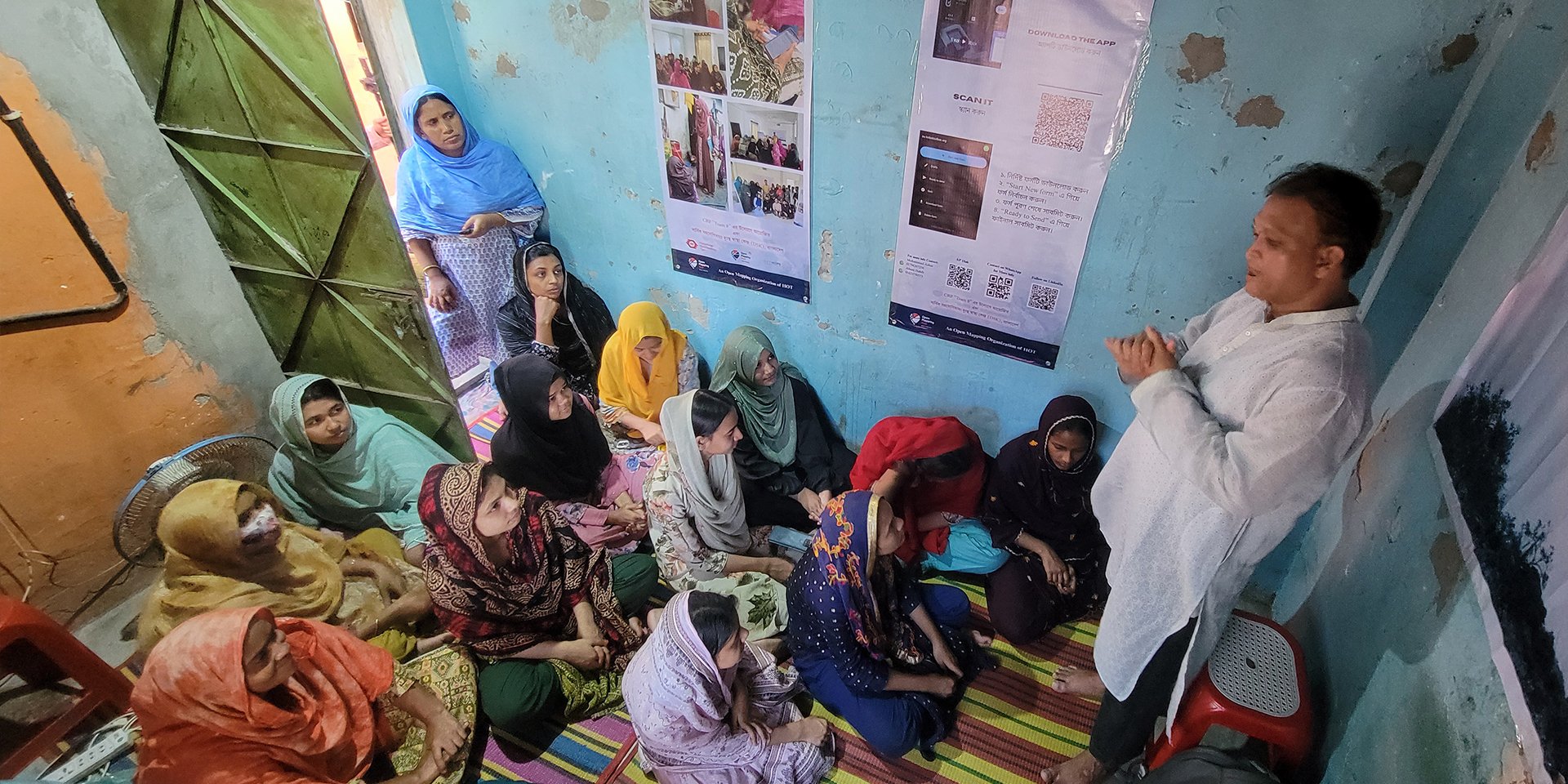
Community training session on health and hygiene practices | Photo: Mohammad Azharul Islam, Fida Hasan
What Changed
By September 2025, the project had exceeded nearly every target we had set. Here is what the numbers showed:
- 22 community members directly trained (target: 20), with 80% women and 60% youth participation across all training activities
- 8,200+ people indirectly engaged through trained participants (estimated)
- 155 amenities mapped on OpenStreetMap (target: 50)
- 6 open mapping volunteers engaged (target: 4)
- 78% of participating households adopted proper handwashing and hygiene practices (target: 50%)
The hygiene adoption rate of 78% was particularly meaningful. At the start of the project, we had set 50% as an ambitious target. To exceed it by nearly 30 percentage points suggests that community members didn’t just attend the training sessions, but genuinely understood why the practices mattered and chose to change. But statistics are only part of the story.
Community Perspectives
Numbers do not tell you about the woman who, after learning about proper handwashing, started teaching her neighbors. They do not tell you about the young man who joined our mapping team and, for the first time, felt like he had a technical skill to offer his community.
We heard stories like these throughout the project. A few stayed with us especially.
“Before the training, I did not realize how much our habits at home were affecting our children’s health. Now I know what to do, and I have told my whole family.” — A female participant, Duaripara, Mirpur-12
“We always thought health issues were normal because of where we live. Now I understand they are preventable. That changes how I think about my home.” — A male participant, Duaripara, Mirpur-12
These reflections point to something that often gets lost in project reports: the shift in how people understand their own situation. From passively held back by circumstances to becoming active agents of change. That shift, however quiet, is what makes an intervention sustainable beyond a project’s end date.
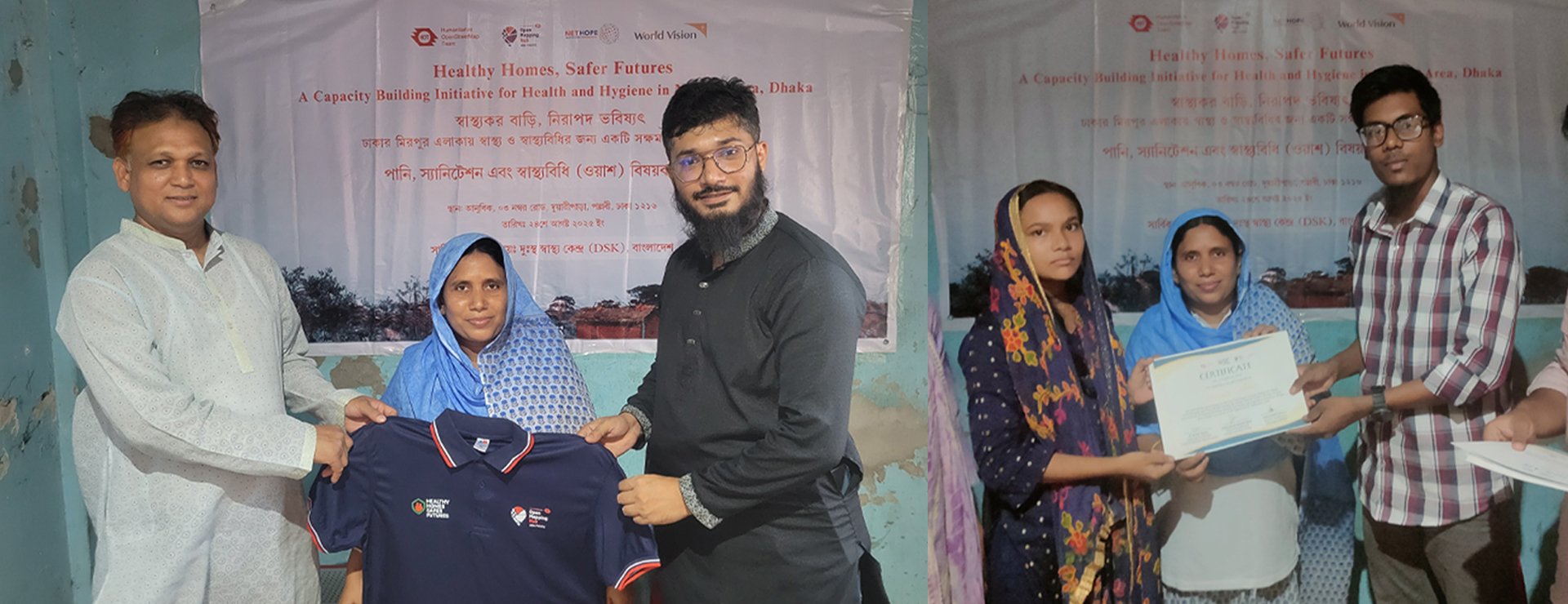
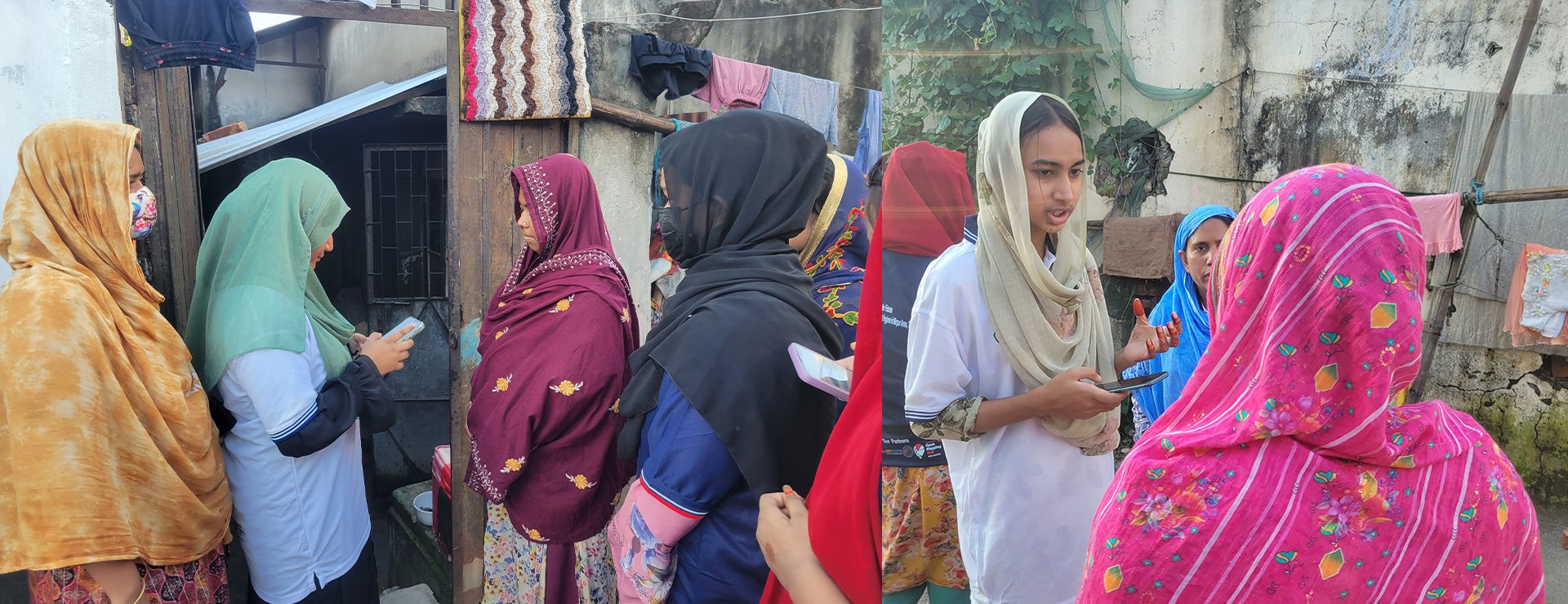
Participants of the Healthy Homes, Safer Futures project | Photo: Mohammad Azharul Islam, Fida Hasan
A Beginning, Not an Ending
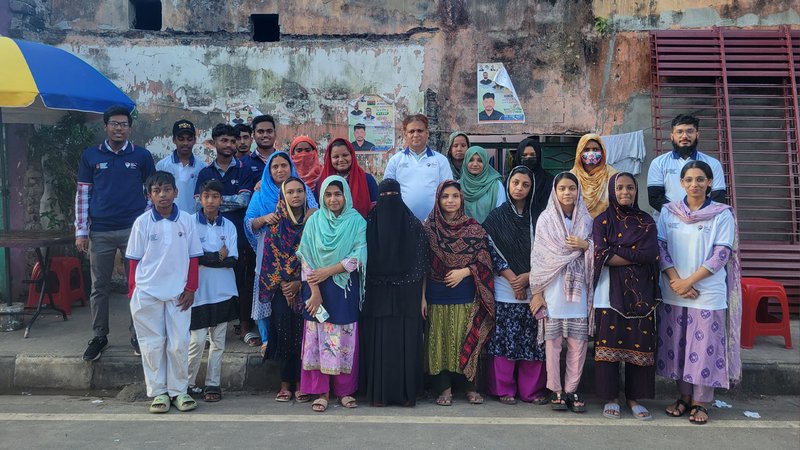
Our team for the Healthy Homes, Safer Futures project, with trainers, trainees, volunteers, and coordinators | Photo: Fida Hasan
Duaripara is now visible on OpenStreetMap in ways it never was before. Its water points, sanitation facilities, and community spaces are documented, discoverable, and usable by planners, NGOs, and government services. That data does not belong to us. It belongs to the community and to anyone who wants to serve it.
We are also honest about what one six-month project can and cannot do. Behavior change takes time. WASH infrastructure still needs investment. The climate pressures, flooding, heat, and pollution that make hygiene very challenging in Duaripara are not going away in just six months.
However, the trained residents remain in the community. The knowledge they gained does not disappear when our project ends. And the mapping infrastructure we built, the habits, the tools, the relationships with local volunteer mappers can be built upon by whoever comes next.
This project planted seeds. They need ongoing water. With community members in Duaripara already taking health into their own hands, long-term, structured support will help them continue growing these seeds into lasting community change.
Watch this video to learn more about the Healthy Homes, Safer Futures project:
Video: Healthy Homes, Safer Futures
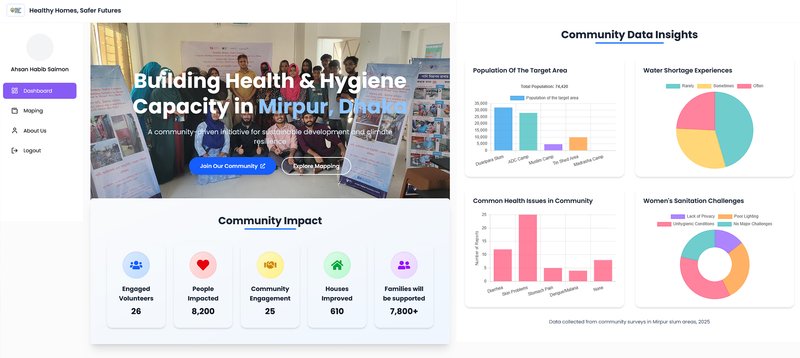
Learn more about the project and explore its data on the Healthy Homes, Safer Futures website and Linkedin.
About the Authors
- Mohammad Azharul Islam is an Oceanographer and GIS Analyst at the Center for Geoservices and Research (CGR), where he specializes in spatial analysis and environmental monitoring. In the Healthy Homes, Safer Futures project, he brought his geospatial expertise to bear on participatory mapping and field research, helping make Duaripara’s health and sanitation landscape visible and actionable. He is also an Open Mapping Guru of HOT’s Open Mapping Hub - Asia-Pacific and has been an active contributor to OSM for the past 4 years, both in Bangladesh and abroad.
- Ahsan Habib Saimon is a Capacity Building Officer at the Christian Commission for Development in Bangladesh (CCDB), where he works at the intersection of community engagement and climate action. In the Healthy Homes, Safer Futures project, he drew on his experience mobilizing and training grassroots communities to design inclusive health and hygiene sessions that reached over thousands of people across Duaripara, Mirpur.
Share