


"Stop the doom scrolling and map the world!": Howden Foundation's CEO recounts mapathon experience
Posted by Claire Harbron, CEO of Howden Foundation, Raiza Pilatowsky Gruner • June 30, 2026
HOT (H): What was your relationship with maps/geographic information before attending this mapathon?
Claire (C): Beyond Google Maps, or traipsing around London in my 20’s with a trusty A-Z, not much!
H: What surprised you during the experience?
C: This experience really opened my eyes to what a privilege it is to live somewhere that’s on the map. Something that I had entirely taken for granted. During the session, HOT’s CEO Rebecca Firth shared a story about a humanitarian team trying to reach people in the aftermath of the Haiti earthquake. Many of the areas they needed to reach weren’t mapped, there were no street names, and they were relying on a combination of three simple printed maps manually distributed between different agencies and a rough sketch on a piece of paper to get around.
That really stayed with me. I’ve completely taken for granted that if I call an ambulance and give them my address, they’ll know how to find me. That simply isn’t the reality for a lot of people around the world.
H: What would you tell someone from your organization who didn’t attend but you wish could have been there?
C: If you are looking for a new hobby, stop the doom scrolling and map the world!
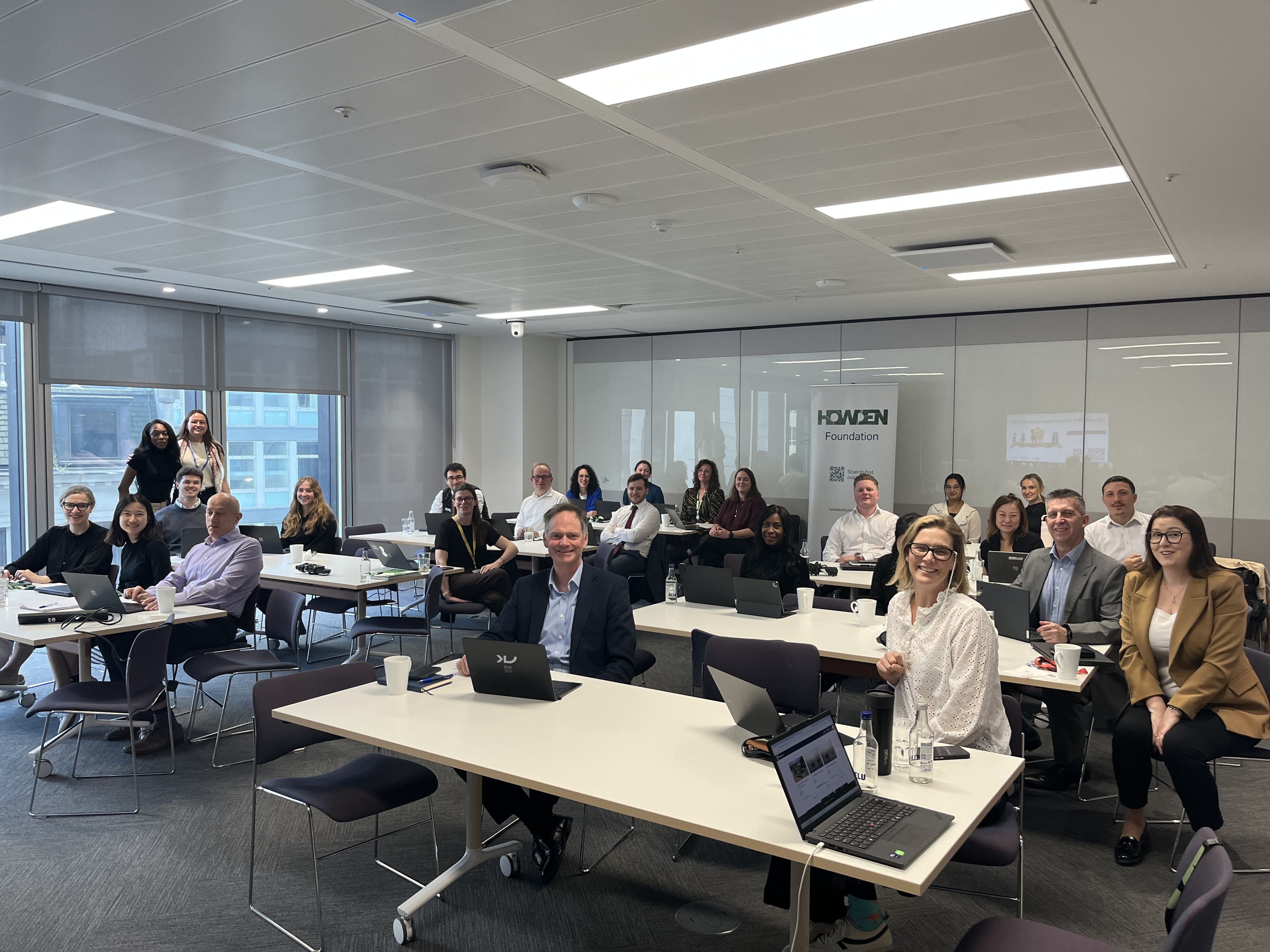
Joining the mapathon was such a rewarding way to give back, and with the phone app it's something you can genuinely fit into even the busiest schedule. I joined in person and was buoyed by the positive energy in the room (and the studious silence as we all searched for buildings in the Amazon!), but a colleague joined virtually and it sounds like they had an equally valuable experience. They shared:
'Exploring the Amazon and its impenetrable cloud cover. Navigating the streets of informal settlements in Sierra Leone. Soaring over the arid landscape of Somalia in search of water. And all from my desk in rural Buckinghamshire, UK!
We were expertly guided through the MapSwipe tool by HOT colleague Belen Soria, who reassured us that all our mapping efforts would be reviewed by a technical team as part of their data review process. This helped quell our fears of sending a helicopter on a wild goose chase through remote unmapped landscapes.
We may have missed out on the morning pastries and the evening drinks, but the Teams chat was buzzing with comments like “I found a house!”, “Is that a pond or a tree?”, “Am I hallucinating a dam?”, and “Does this cloud cover ever end?”.
By investing an hour and a half of our time, we gained an understanding of how reliant we are on open access maps to understand the world around us and an appreciation of the challenges facing global humanitarian aid teams when responding to disasters in unmapped locations.'
H: Do you think these types of activities are worth engaging with? If so, why?
C: Absolutely. It’s a great way to help people learn about, engage with and contribute to a cause that really matters and genuinely makes a difference. While there are multiple rounds of validation, including checks by mapping experts, mapathons using tools like MapSwipe help the Humanitarian OpenStreetMap Team move one step closer to putting every person on the map.
A special thank you to the Howden Foundation for joining us for the Mapathon and funding our project in Freetown. We also invite other foundations and companies to join our corporate volunteering program.
Share