



Rain for Resilience: Community-Based Rainwater Harvesting in Aambagan Chinnomul, Chattogram
Posted by Md. Muaz Hussain • Feb. 22, 2026
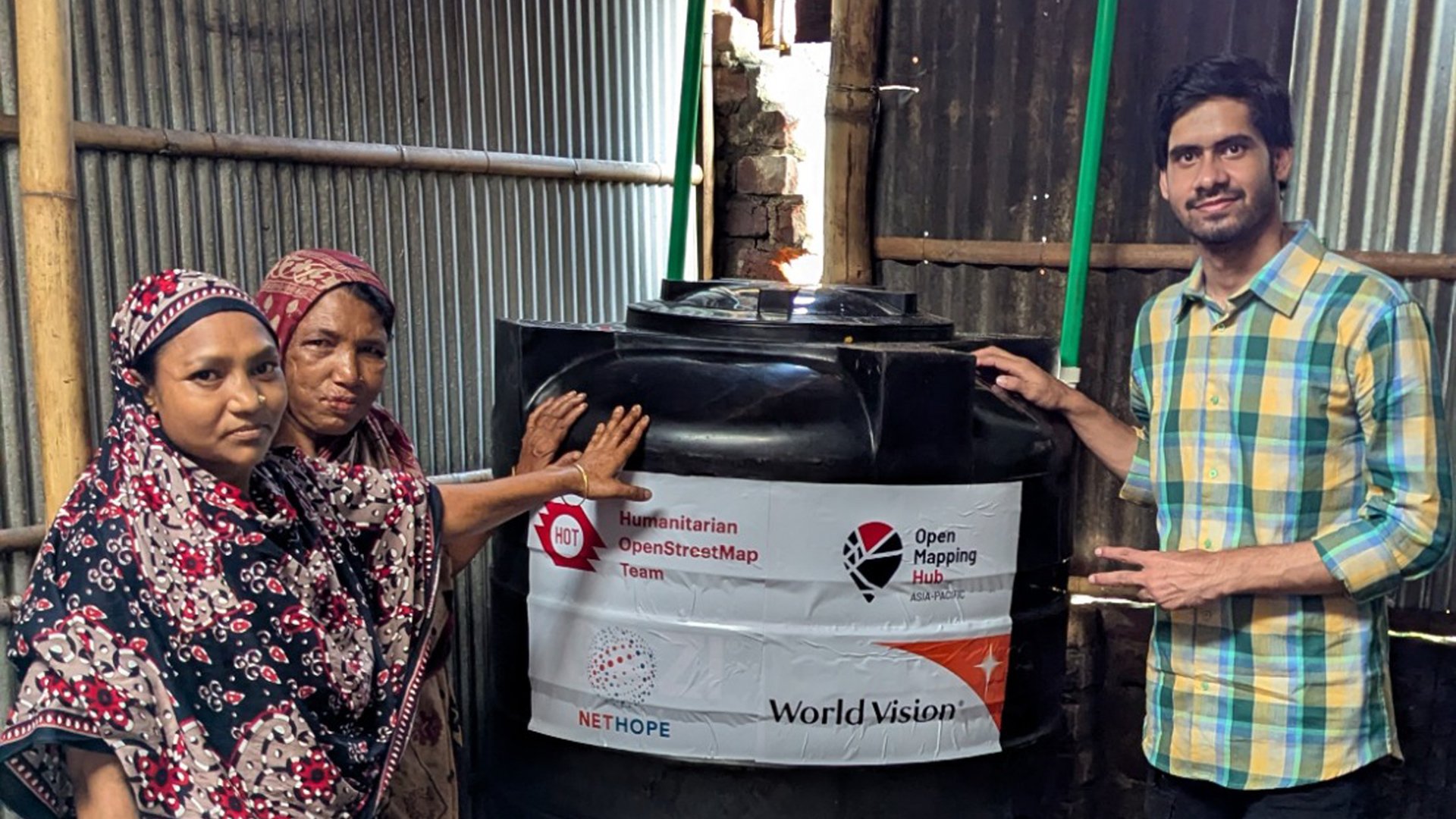
This initiative was designed, led, and implemented by Md. Muaz Hussain as part of the Climate Resilience Fellowship – a joint initiative by HOT's Open Mapping Hub - Asia-Pacific and World Vision Bangladesh, funded by NetHope.
Urban Water Paradox in Bangladesh
Bangladesh is often described as a water-abundant country, receiving high annual rainfall and intersected by one of the world’s largest river systems. Yet, for millions of urban low-income households, water insecurity is a daily reality. The problem lies not in the absolute availability of water, but in access to sufficient, reliable, and affordable water services, particularly in informal settlements that fall outside formal planning and service delivery frameworks.
Rapid and unplanned urbanization has intensified this crisis. As cities expand, low-income migrants settle in informal settlements where legal land tenure is absent, infrastructure is fragile, and public utilities are either inaccessible or deliberately withheld. According to the Slum Statistics of Bangladesh (2022), over 1.7 million people live in informal settlements nationwide, many relying on informal or unsafe water sources.
Chattogram: Growth Without Inclusion
Chattogram, Bangladesh’s second-largest city and a major economic hub, illustrates this contradiction sharply. While the Chattogram Water Supply and Sewerage Authority (CWASA) has expanded water production capacity from approximately 180 million liters per day (MLD) in 2014 to nearly 500 MLD by 2023–2024, access remains uneven. Communities living in informal settlements are disproportionately excluded from legal connections and instead depend on illegal pipelines, vendors, shared tube-wells, or religious institutions.
This exclusion translates into higher per-unit water costs, longer collection times, and increased health risks, effectively penalizing poverty. Women and children bear the greatest burden, facing reduced safety, dignity, educational opportunities, and time for income-generating activities.
Project Area
Aambagan Chinnomul is home to an estimated 10,000 residents, with an average household size of 7–9 members, significantly higher than the national urban average. High household density intensifies daily water demand and exacerbates competition over limited sources.
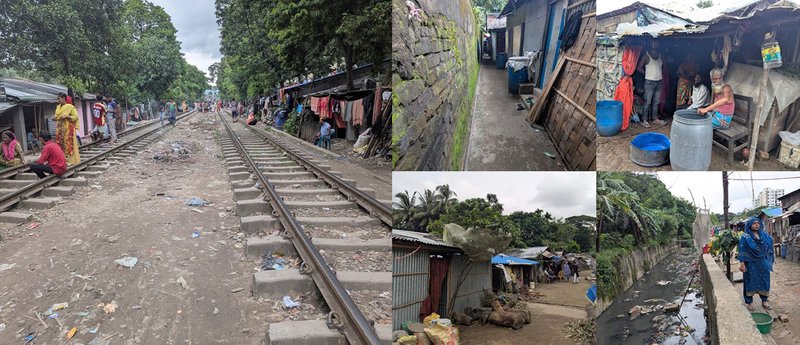
Snapshots of Aambagan Chinnomul within Chattogram City Corporation, Bangladesh | Photo: Samin Rahman
Despite the presence of three main water sources in the area, none provide reliable access:
1) Illegal Pipeline Connections
These pipelines deliver water at extremely low pressure (around 1 liter per minute) for only 20–30 minutes per day, often failing for nearly half the month. Households pay approximately BDT 1,000 per month for this unreliable service.
2) Water Vendors (Tube-well Based)
Vendor-operated tube-wells supply water for 4–5 hours per day in shifts. During dry seasons, families spend BDT 90–130 per day, a severe burden for low-income households.
3) Mosque-Fed Water Tank
The community mosque provides limited water access in the evening if sufficient water remains after religious use. While important, this source is conditional and insufficient for daily household needs.
As one resident explained: “We have water pipes in our homes, but most days there is no water. When it doesn’t come, we have no choice but to buy.”
Project Journey
Research and Needs Assessment
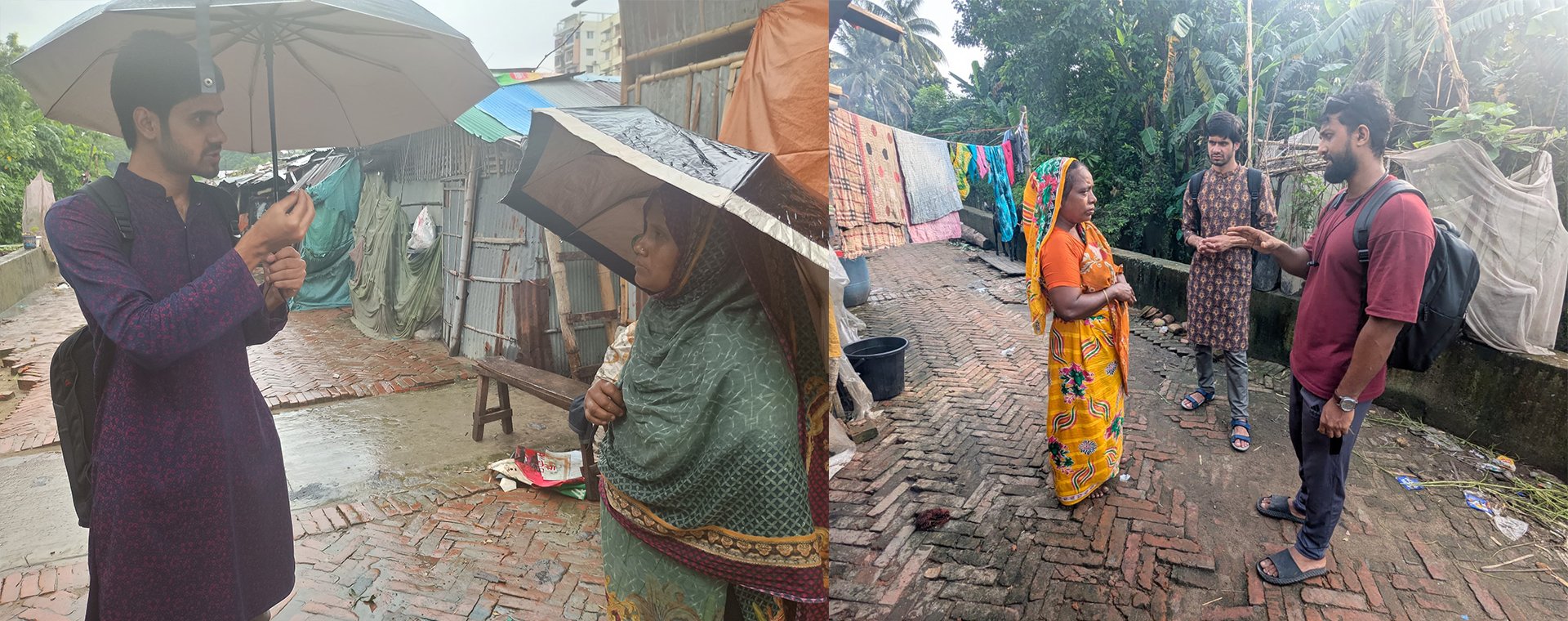
The research and needs assessment used a mixed-methods, participatory approach to capture both statistical patterns and lived experiences of water insecurity. It deliberately centered women’s experiences, recognizing their disproportionate responsibility for water collection.
Data Collection Methods
- Household Surveys: Conducted with 10 representative households to document water use, costs, storage capacity, and time spent collecting water.
- In-depth Interviews: Captured personal narratives from women, elderly residents, and politically marginalized households.
- Focus Group Discussions: Explored collective concerns, conflict dynamics, and community perceptions of rainwater harvesting.
- Field Observation: Direct observation of water collection practices at vendor tube-wells and communal sources.
- Secondary Review: Analysis of CWASA reports, Bangladesh Bureau of Statistics (BBS) data, Slum Statistics of Bangladesh (2022), and World Bank publications.
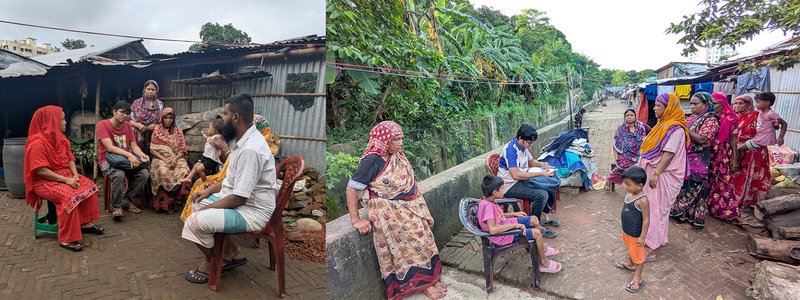
Focus group discussions with local community members | Photo: Samin Rahman and Md. Muaz Hussain
Key Findings
1) Water Insecurity as a Multidimensional Crisis
The assessment revealed that water insecurity in Aambagan Chinnomul is not solely physical. It is shaped by:
- Economic constraints: High daily expenditures on water
- Power dynamics: Political favoritism and control by local intermediaries
- Social inequity: Disproportionate burden of water collection on women and elderly
- Time poverty: Loss of productive and caregiving hours
2) Severe Time and Physical Burden
Women reported spending 3–4 hours per day collecting water, often making multiple trips at fixed vendor-determined times. This time burden directly reduces opportunities for income generation, childcare, and rest.
3) Financial Stress and Inequality
Households spend an average of BDT 63 per day, with some spending up to BDT 90–130 during dry seasons. Ironically, these numbers are higher than the spending of wealthier city residents with legal connections, which means lower income households pay more per unit of water.
4) Conflict and Normalized Suffering
Long queues, line-cutting, and uneven access frequently lead to conflict. Over time, residents described this suffering as “normal,” highlighting how deprivation becomes embedded in daily life.
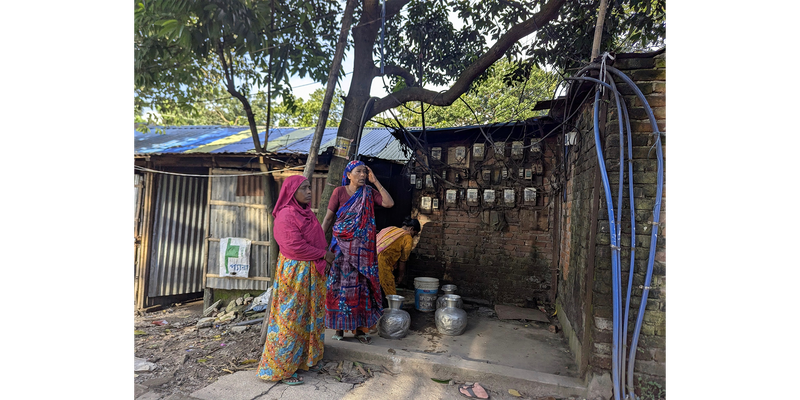
Residents queuing to collect water from vendor-operated tube-wells during limited supply hours | Photo: Samin Rahman
Why Rainwater Harvesting
Observing women and children struggling at vendor tube-wells reinforced the urgency of intervention. Through community consultations and household discussions, residents indicated strong acceptance of rainwater harvesting (RWH) as a preferred water supply option when it is designed to be:
- Community-managed, ensuring local ownership, shared responsibility, and reduced dependence on external service providers
- Free at the point of use, addressing affordability constraints faced by low-income households and reducing reliance on costly vendor-supplied water
- Transparent and equitable, allowing fair access to stored water and minimizing conflict or elite capture within the community
Community trust was critical for the project’s success. Trust-building, rather than technical explanation alone, proved essential in shifting community perception. Demonstrating that rainwater could be safe, manageable, and collective was key to acceptance.
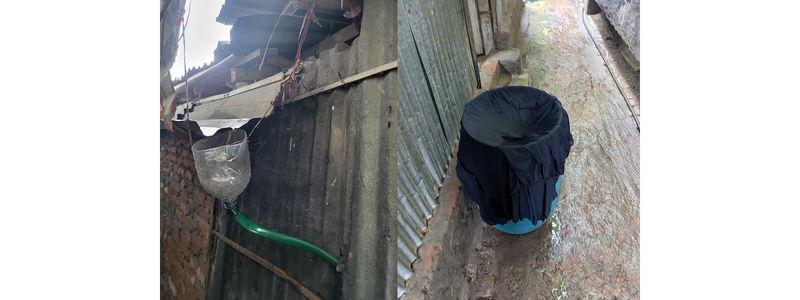
Community-made RWH system installed by local residents for household water use, which existed prior to the project and was observed as part of the baseline assessment | Photo: Md. Muaz Hussain and Samin Rahman
Installation Process
1) Site Selection and Open Mapping Integration
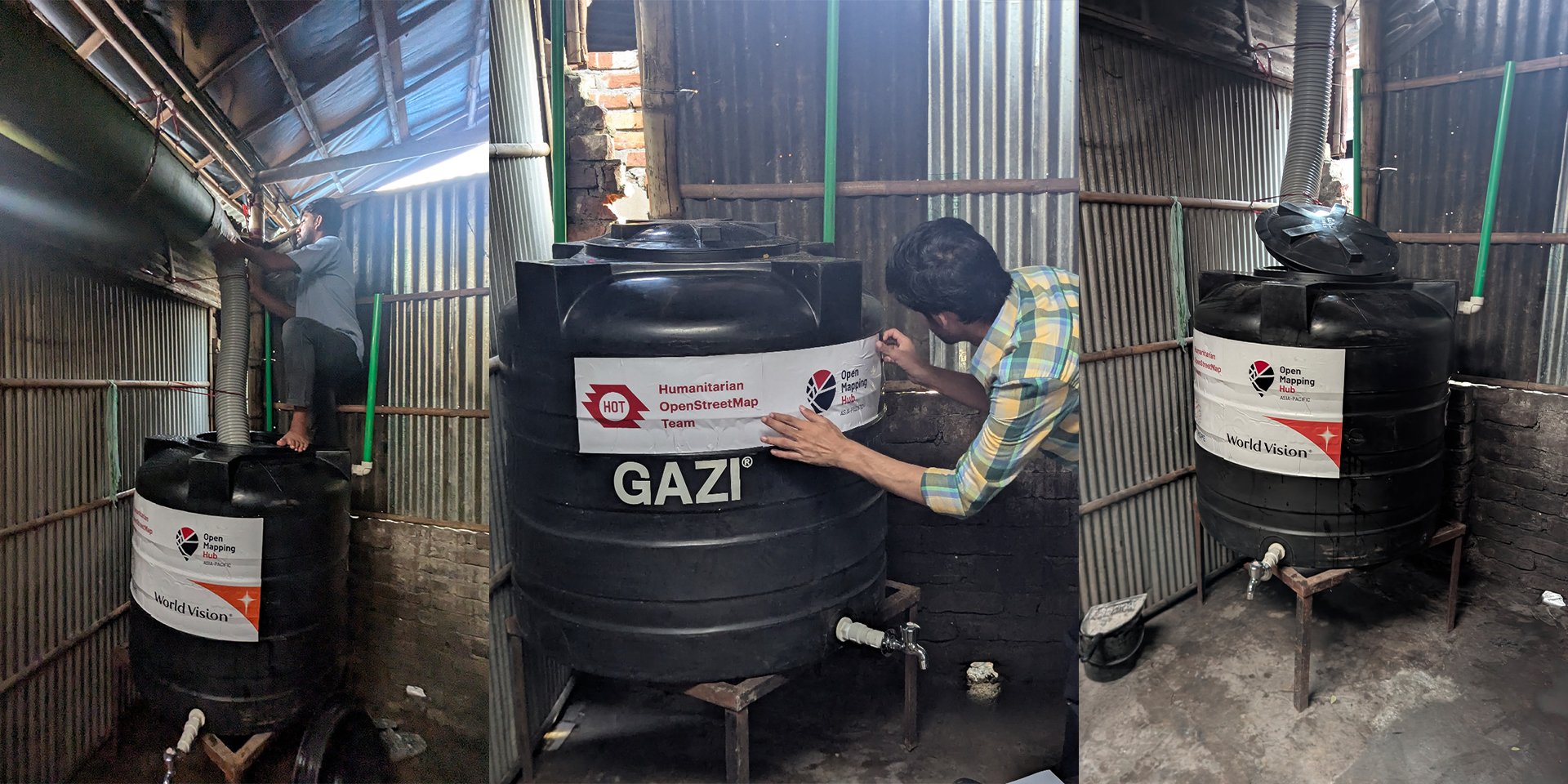
In addition to community consultation, open mapping was used to guide the selection of households and the placement of the RWH tank. The 8–10 households chosen for the pilot were mapped, and the exact location of the tank was marked. Nearby infrastructure, including roads, the canal, and the rail line, was also mapped to ensure that the tank was installed in a safe and accessible location. Mapping these features helped support fair access for all households, minimized potential conflicts, and ensured effective service.
2) Construction
Local residents and research volunteers installed tanks using locally available materials. Tanks were then connected to rooftop catchments, with basic filtration for safe use and storage to ensure water availability.
3) Training and Monitoring
After installation, a group called the “Aambagan Pani Committee” was formed, consisting of 10 members from the selected households. The group received training and knowledge-sharing sessions to manage the RWH system, maintain cleanliness, and ensure its sustainable operation.
Observed Benefits and Impact
- Time reduction for water collection: 3–4 hours → 5–10 minutes per household
- Cost savings: Elimination of vendor purchases during rainy periods
- Reduced strain: Significant relief for women and elderly
- Social cohesion: Reduced conflict through shared governance
Operational output of the RWH system demonstrating stored water availability for daily use
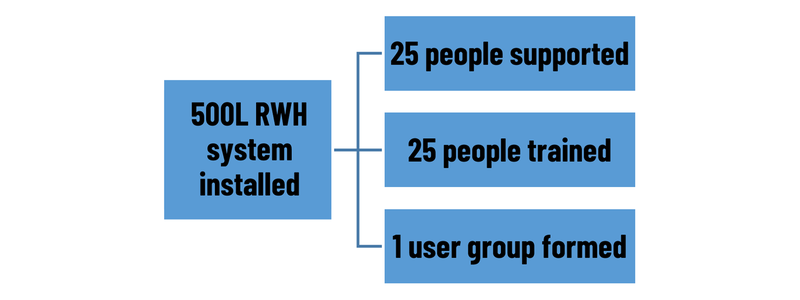
With the installation of the RWH system, 8–10 households now have improved water access, with scalability potential through increased storage capacity.
More importantly, the community's active participation and collaboration, from the needs assessment to the formation and training of the local committee, has led to sustainable use and operation of the RWH system.
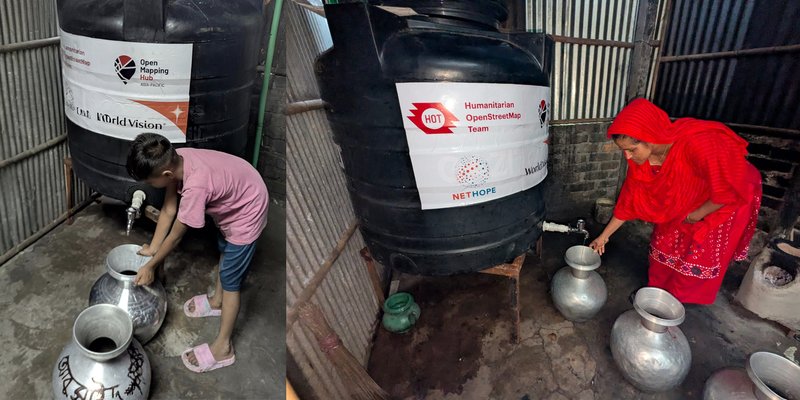
Community members are now using the RWH system for their daily needs. | Photo: Samin Rahman
Salina Apa, Lead Member of the Aambagan Pani Committee, shared how the RWH system has significantly reduced water scarcity in their area. | Video: Samin Rahman
Conclusion
The water crisis in Aambagan Chinnomul is a reflection of broader urban inequities, where informal communities are excluded from basic services despite city-wide infrastructure growth. This project demonstrates that community-based rainwater harvesting is not merely a technical solution, but also a social and governance intervention that restores time, dignity, and agency to marginalized urban residents.
“Rain for Resilience” offers a locally led, climate-responsive blueprint for addressing urban water insecurity in Bangladesh. By transforming rainfall into a shared public resource, the initiative strengthens community resilience and charts a path toward more inclusive urban futures.
About the Author
Md. Muaz Hussain is an Urban and Regional Planning graduate from Chittagong University of Engineering and Technology (CUET), Bangladesh. His academic and professional interests include urban development, climate resilience, water, sanitation and hygiene (WASH), and GIS-based analysis. He has experience working with research and development initiatives related to sustainability, climate vulnerability, and community needs. Muaz is engaged in evidence-based research and field-level interventions aimed at promoting inclusive, resilient, and sustainable development.
This article was written by Md. Muaz Hussain, with editorial contributions from Tony Liong.
Cover photo credit: Samin Rahman. Explore more photos from the project here.
Share