



The Resilient Trashformers: How Participatory Mapping and Community Action Are Building Climate Resilience in Dhaka's Ershad Nagar
Posted by Asif Bin Alam Seum, Nafisa Nandini • Feb. 21, 2026
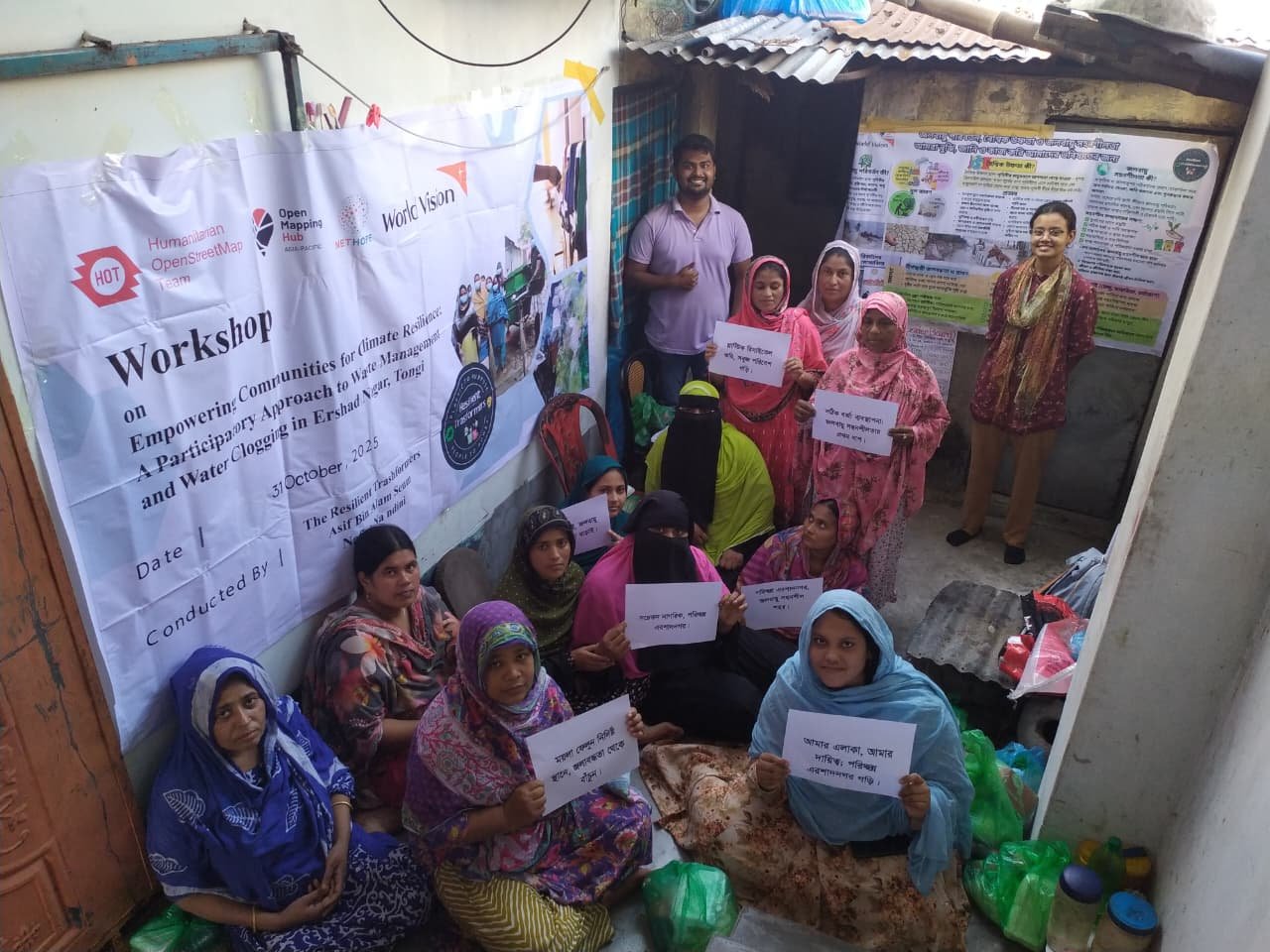
This initiative was designed, led, and implemented by Asif Bin Alam Seum and Nafisa Nandini as part of the Climate Resilience Fellowship – a joint initiative by HOT's Open Mapping Hub - Asia-Pacific and World Vision Bangladesh, funded by NetHope.
In the dense urban landscape of Ershad Nagar, Tongi, a familiar challenge intensifies with each monsoon season. For the low-income households here, plastic waste isn't just an eyesore; it's a direct threat. This waste clogs drainage infrastructure, leading to severe waterlogging, health hazards such as dengue and waterborne diseases, and significant economic disruption.
We saw that this environmental challenge disproportionately impacted women and youth, who bear the brunt of managing household sanitation yet are often underrepresented in waste governance.
As part of the Climate Resilience Fellowship, our team, "The Resilient Trashformers", launched the project "Empowering Communities for Climate Resilience: A Participatory Approach to Waste Management and Water Clogging in Ershad Nagar, Tongi". Our goal was to pilot a low-cost, community-driven model that tackles waste and builds resilience from the ground up.
Seeing the Unseen: Mapping the Problem
We couldn't solve a problem we couldn't see. The first step was to understand the precise nature of the challenge. We engaged with the community to conduct a needs assessment and found that while awareness efforts had been made in the past, only 31% of households were actively segregating waste.
To get a clearer picture, we partnered with YouthMappers from Dhaka University and Shahjalal University of Science and Technology. Together, we trained a core group of 15 "Community Resilience Champions"; primarily women and youth, in participatory waste mapping.
Using OpenStreetMap (OSM) and printed maps, these new community mappers identified and mapped critical hazard points. Suddenly, the problem had clear data points: we could see exactly which 5-10 drains were most clogged, where illegal waste dumping was happening, and even other hazards like exposed electrical wires. This data became the foundation for our action plan.
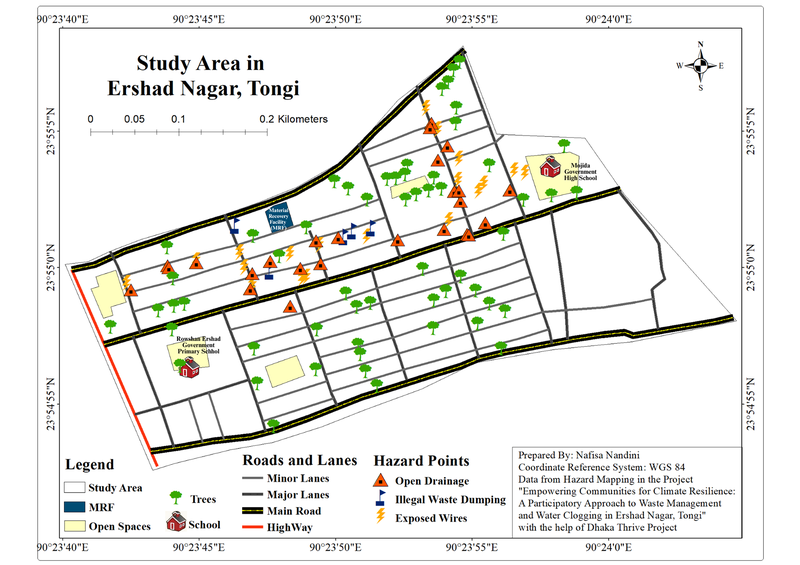
Map of hazard locations in Ershad Nagar, Tongi | Map visualization: Nafisa Nandini
From Data to Action: Waste Clubs and Points-for-Trash
With the problem mapped, we shifted our focus to community action. We mobilized our 15 champions into functional "Waste Clubs," with members taking on specific roles: mapper, cleaner, educator, and tracker.
We held interactive Waste Management Training sessions and even used a waste segregation game titled “কোনটা কোথায়?” (English: “What Goes Where?”) to make the concepts of recycling and waste separation engaging and accessible.
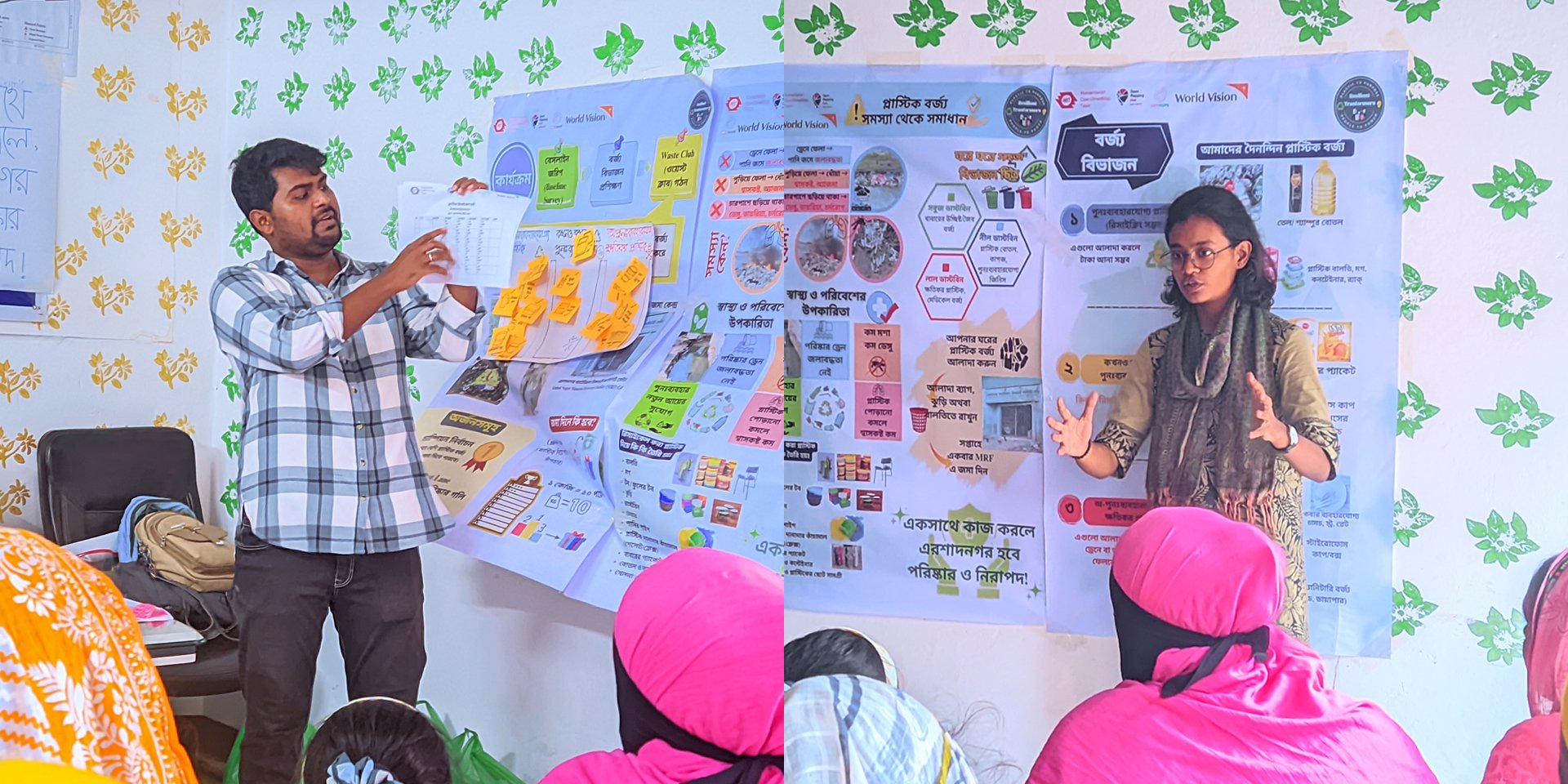
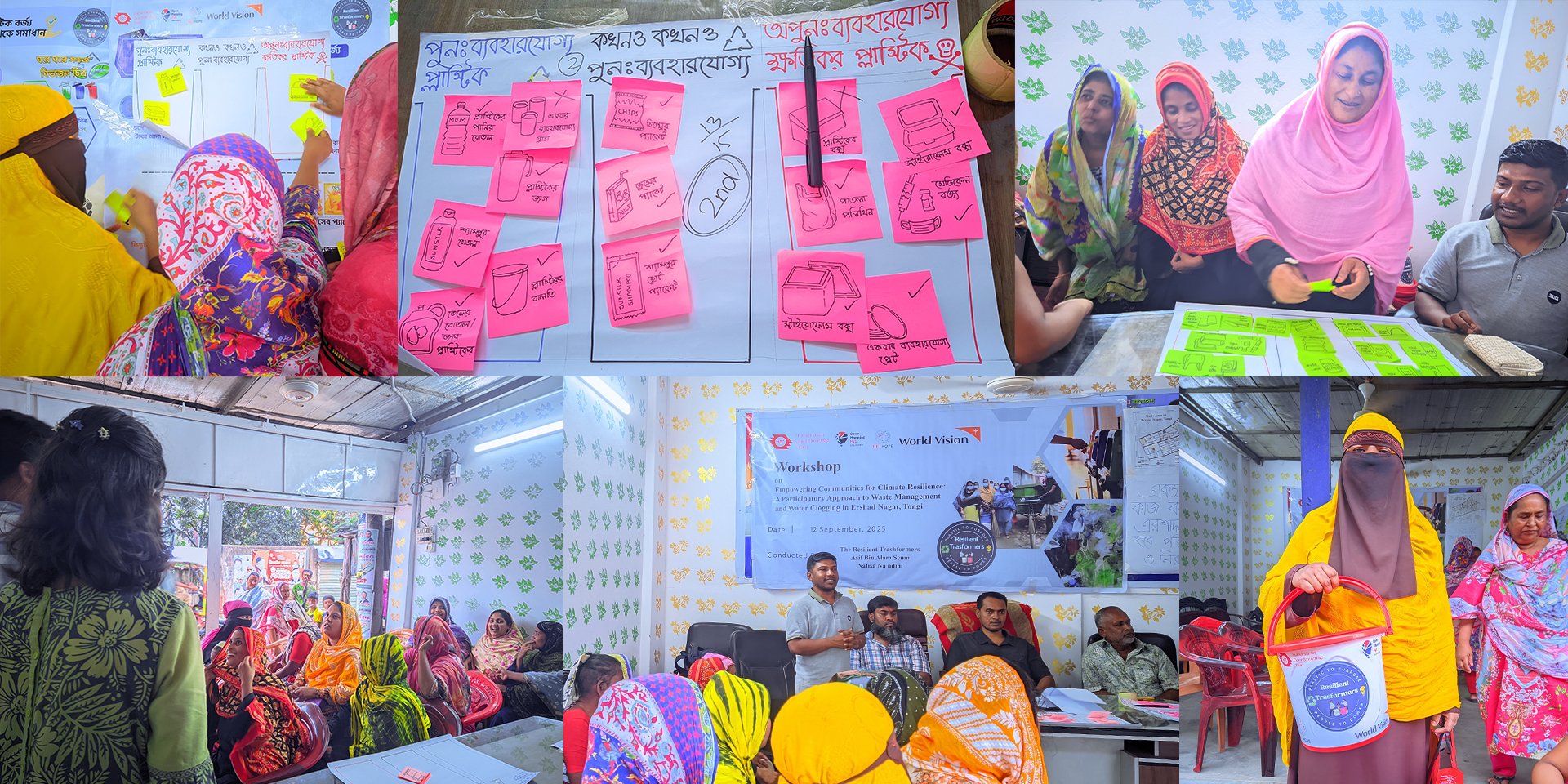
Interactive learning in action: Community members distinguish between recyclable and organic materials during the waste segregation game, a hands-on activity designed to make waste management habits intuitive and engaging. | Photo: Ramisa Maliha
To create sustainable, long-term change, we knew we needed more than just education; we needed tangible incentives. We launched a “Points-for-Trash” program that allowed community members to earn points for plastic waste they collected.
This simple system was incredibly effective. We tracked collections on a public leaderboard and held small award ceremonies to recognize the "Top Collectors" and "Cleanest Lane". This friendly competition turned waste collection into a source of community pride and, for many, a new source of income.
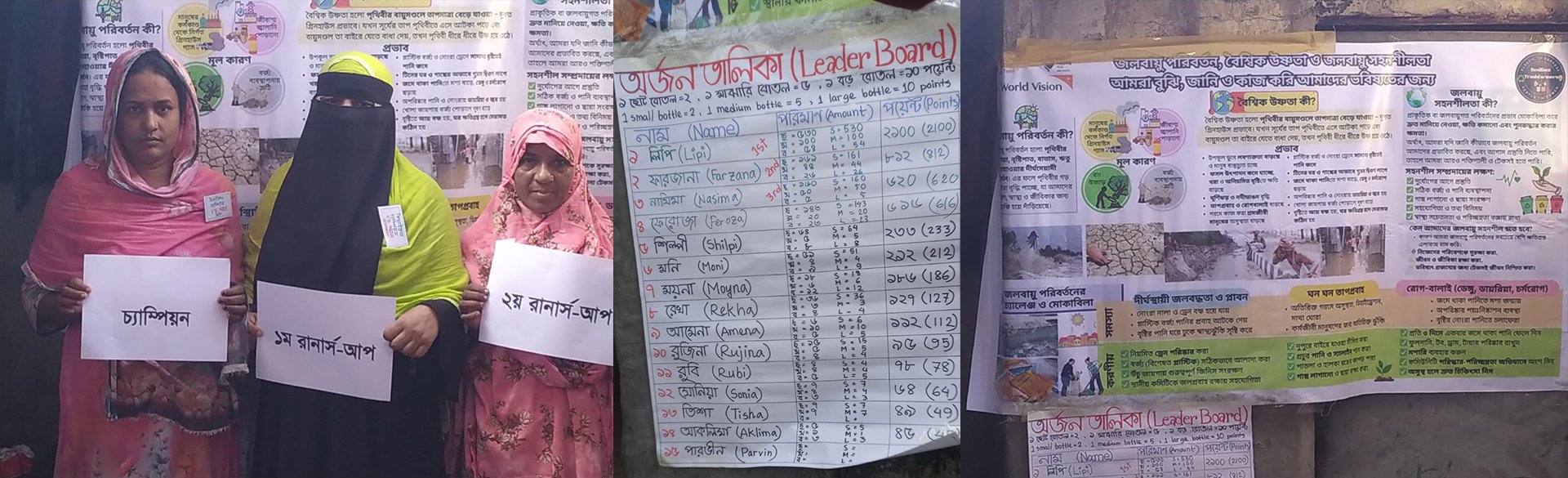
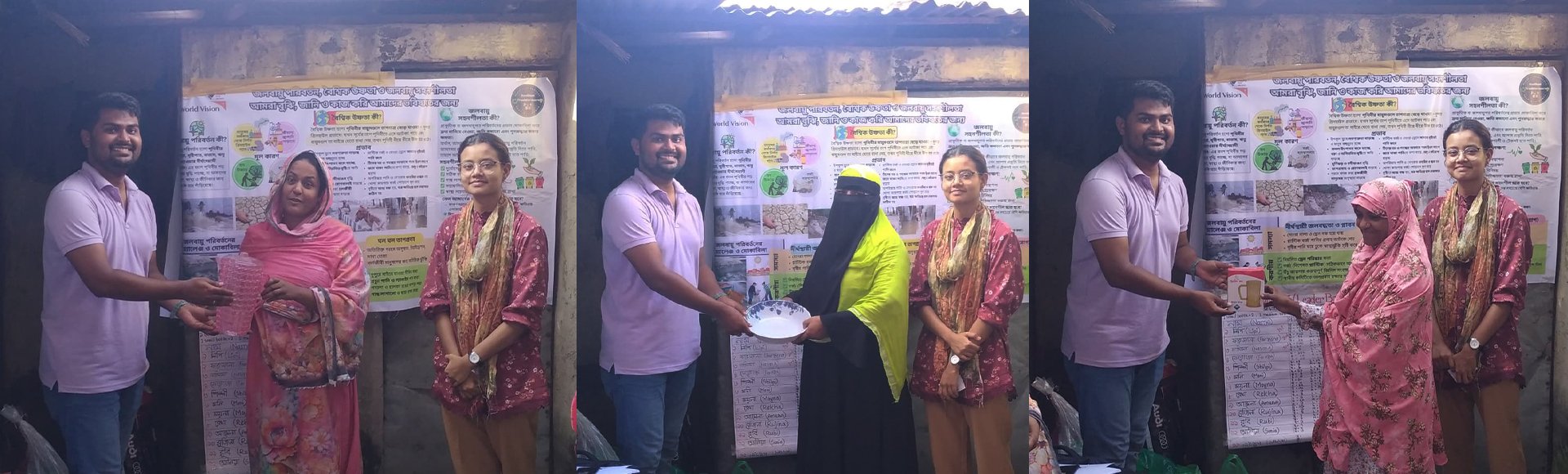
Incentivizing change: The "Top Recyclers" award ceremony celebrated households that excelled during the month (from left: Lipi, Farzana, and Nasima). The new community leaderboard has proven to be a key motivator in driving consistent participation in waste sorting. | Photo: Md. Sakib Mubalig
The Impact: A Cleaner, More Resilient Community
The results of this 12-week pilot project were inspiring. Together with the community, we:
- Trained 15 women and youth champions in mapping and waste management.
- Engaged over 50 households in active waste segregation and collection.
- Removed over 300 kg of plastic waste from the environment.
- Mapped 5-10 critical waste hotspots and clogged drains.
More importantly, we saw a tangible shift in perception. Waste was no longer just "trash"; it was a resource. In Ershad Nagar, women are now stepping forward to lead change, transforming their community through awareness, action, and teamwork.
“I used to think waste management was only the government’s job. Now I realize it’s our shared responsibility. Keeping our area clean benefits all of us.” – Lipi, Waste Club Member
“Earlier, only men used to take part in these activities. Now we, the women, are leading waste segregation and drain cleaning ourselves.” – Shilpi, Waste Club Member
Moreover, we strived to make our Waste Club an inclusive space for all. In line with this vision, one of our members was a person with speech disability. Yet, this never held her back, she enthusiastically took part in the trainings, games, and all project activities. Her active participation stood as a powerful reminder that environmental action belongs to everyone. We believe her involvement will inspire other persons with disabilities to step forward and contribute to protecting our environment.
This project would not have been possible without our partners. The Gazipur City Corporation (GCC) provided essential administrative support, while World Vision Bangladesh and the Bangladesh Red Crescent Society (BDRCS) helped us with community mobilization and technical guidance. Our efforts were designed to reinforce existing infrastructure, feeding the collected plastics into the nearby BDRCS Material Recovery Facility (MRF).
We have already shared our findings and a policy brief with the Gazipur City Corporation, documenting our low-cost, replicable model. The Waste Clubs are built to last, owned by the community to continue their work.
This project has shown that when you combine the power of open mapping data with the energy of empowered local champions, you can build climate resilience one clean drain and one recycled bottle at a time.
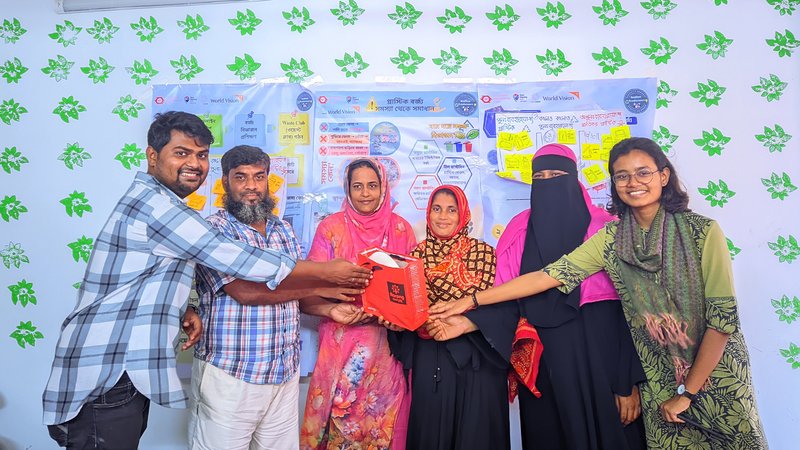
Champions of resilience: A group portrait of the project participants alongside the dedicated "Waste Club" champions, who will take the lead in sustaining these waste management initiatives within the community. | Photo: Ramisa Maliha
About the Authors
- Asif Bin Alam Seum is a climate resilience practitioner specializing in climate risk reduction and community-based adaptation in Bangladesh. At Oxfam, he plays a key role in designing and implementing programs aimed at building resilience among communities vulnerable to social and climate change challenges. His work centers on creating sustainable strategies that enable these communities to adapt and thrive. He works closely with local partners to strengthen capacity, improve protection systems, and champion inclusive, rights-based adaptation. His work is driven by a strong commitment to building long-term resilience and advancing climate justice.
- Nafisa Nandini is a geographer and environmental enthusiast committed to protecting the planet through mapping, geospatial technology, and humanitarian efforts. Fascinated by Earth's physical processes, she explores how human settlement and modernization often disrupt natural systems, striving to find sustainable solutions. Her passion lies in using geospatial tools to empower communities, enhance disaster resilience, and address environmental challenges. By combining scientific insights with hands-on involvement, she aspires to foster resilience and advocate for sustainable growth, ensuring that human development harmonizes with the planet's natural processes.
This article was written by Asif Bin Alam Seum and Nafisa Nandini, with editorial contributions from Tony Liong.
Cover photo credit: Md. Sakib Mubalig. Explore more photos from the project here.
Share