




Building Resilience Through Risk-informed Community-led Urban Development - KYC Nairobi
Kenya
HOT's East and Southern Africa Hub is partnering with SDI Kenya to support risk-informed community mapping across 33 informal settlements in Nairobi. By combining drone imagery, open geospatial data, and on-the-ground knowledge, the project updates settlement profiles and builds lasting local mapping capacity, leaving communities better equipped to use data for their advocacy and resilience.
Context
Nairobi is one of Africa's fastest-growing cities, yet an estimated 60–70% of its residents live in informal settlements that occupy just 6% of the city's residential land. Communities in Mathare, Kibera, Mukuru, and dozens of smaller settlements face compounding, overlapping risks: inadequate water and sanitation, poor drainage, limited emergency access, and near-total exclusion from official city maps and planning processes.
When floods, fires, or disease outbreaks strike, response is slowed because reliable data on who lives where, what infrastructure exists, and where the most vulnerable households are simply does not exist.
SDI Kenya, an affiliate of Slum Dwellers International, is working with HOT through a GIZ-funded initiative focused on the resilience and inclusion of the urban poor. Together, the two organizations are updating settlement profiles for 33 villages across Nairobi, grounded in a shared conviction: that improved location data is fundamental to humanitarian decision-making, climate action, and inclusive urban development.
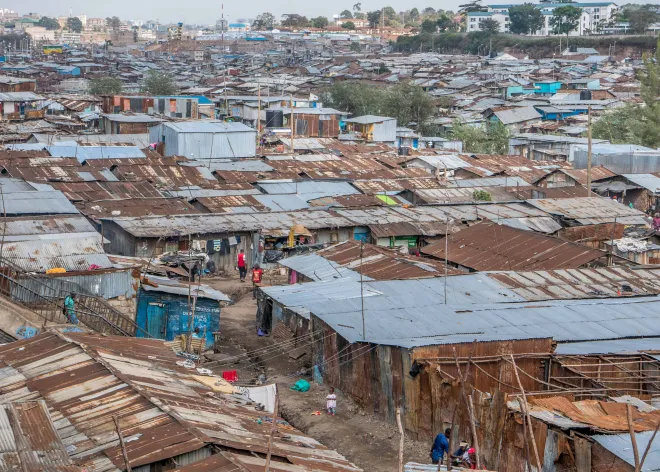
An aerial view of Mathare informal settlement, one of Nairobi's largest and most densely populated communities. | Photo: Borderline
Our approach
The collaboration delivers two integrated streams of work across 33 villages in the Nairobi River basin.
- Drone mapping
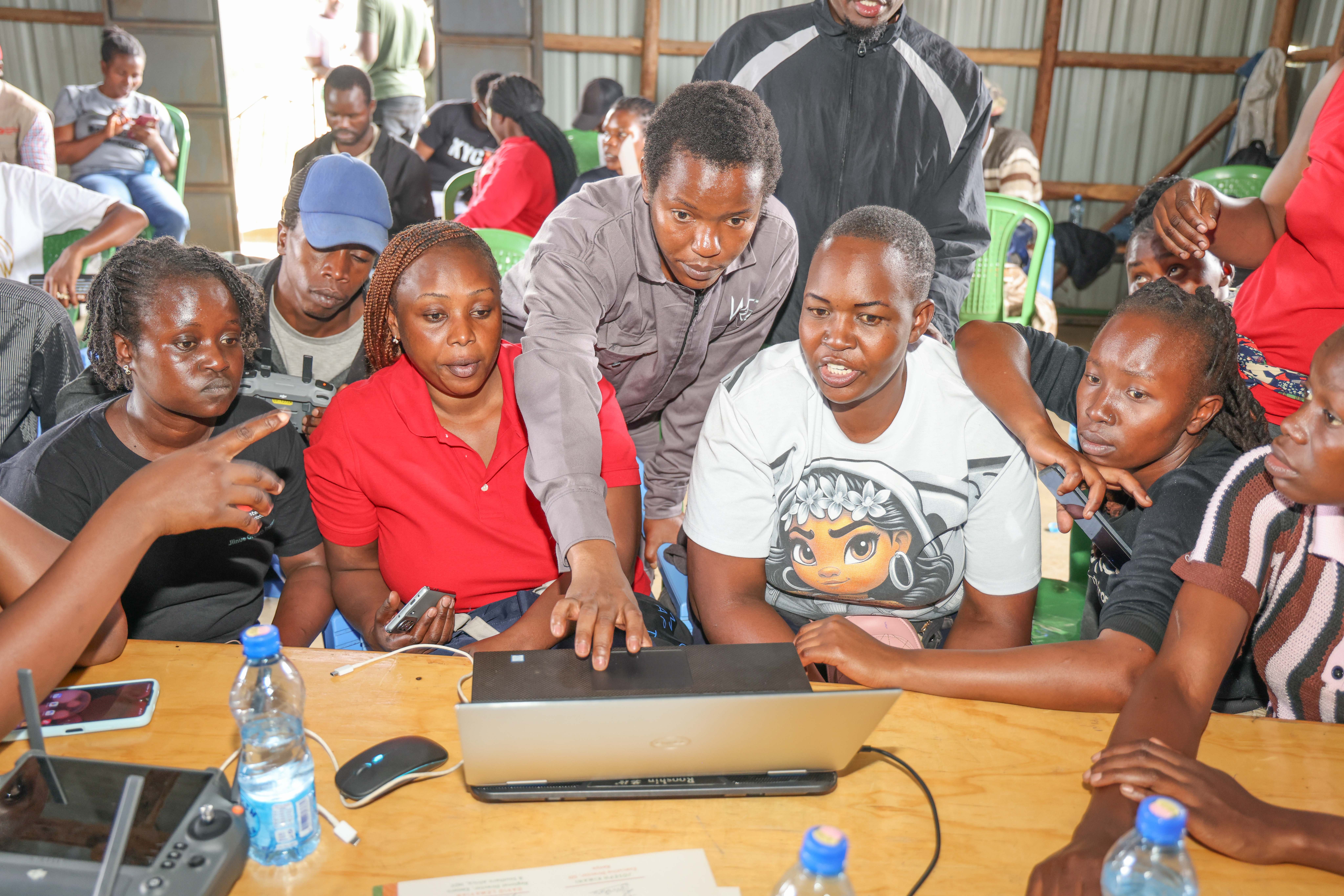
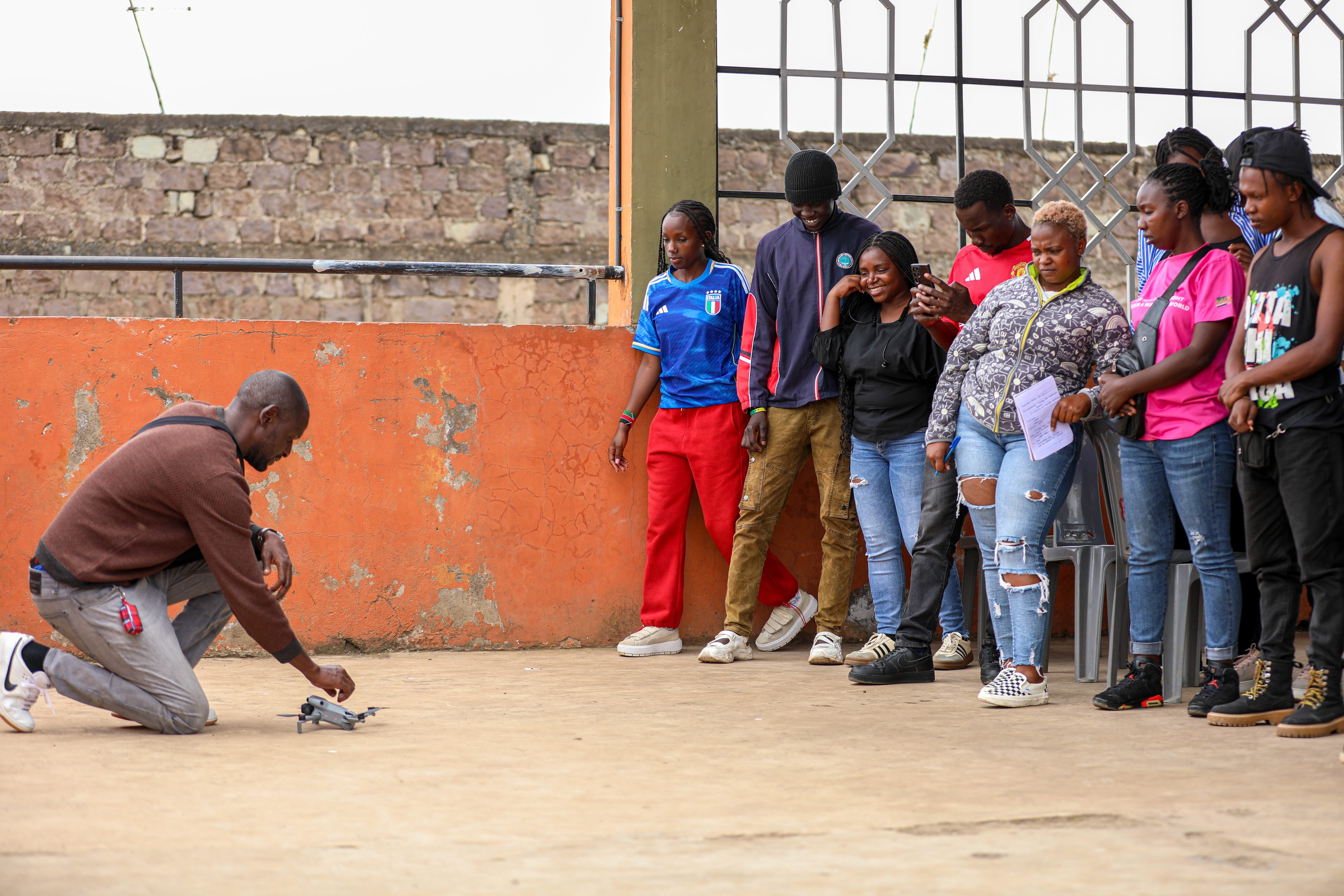
HOT supported acquisition of drone imagery across 33 villages, covering approximately 2.7 km², through supervised, field-based flight demonstrations. SDI Kenya teams received structured coaching on drone operations, settlement-scale mapping methodologies, and data capture protocols. - Open mapping tools and data infrastructure
HOT onboarded SDI Kenya's teams onto the Field Mapping Tasking Manager (Field-TM), HOT's open-source platform for coordinating field mapping campaigns. Training covered system setup, data ingestion, processing workflows, and drone imagery hosting to support ongoing analysis, monitoring, and future data reuse.
From capacity building to local leadership
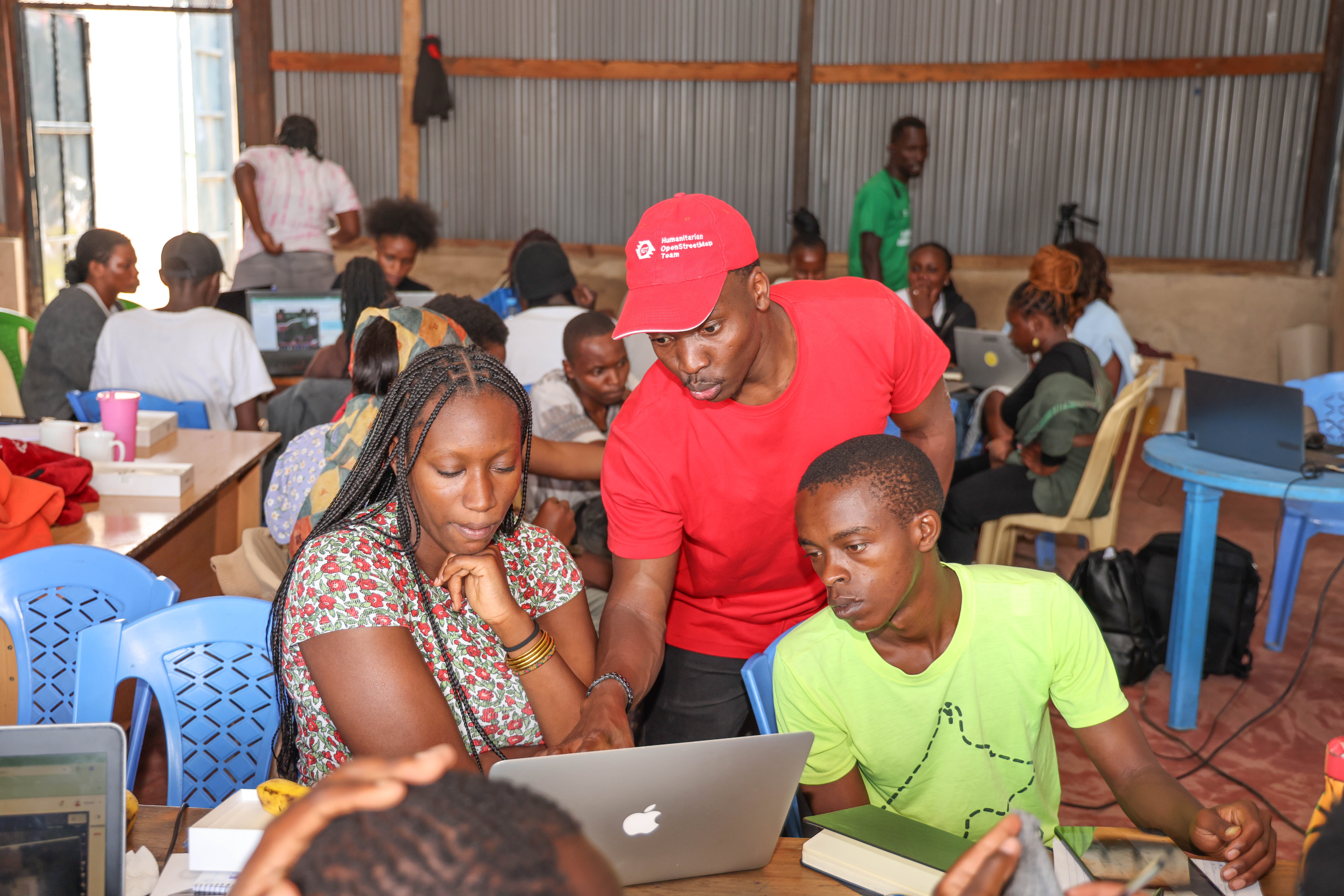
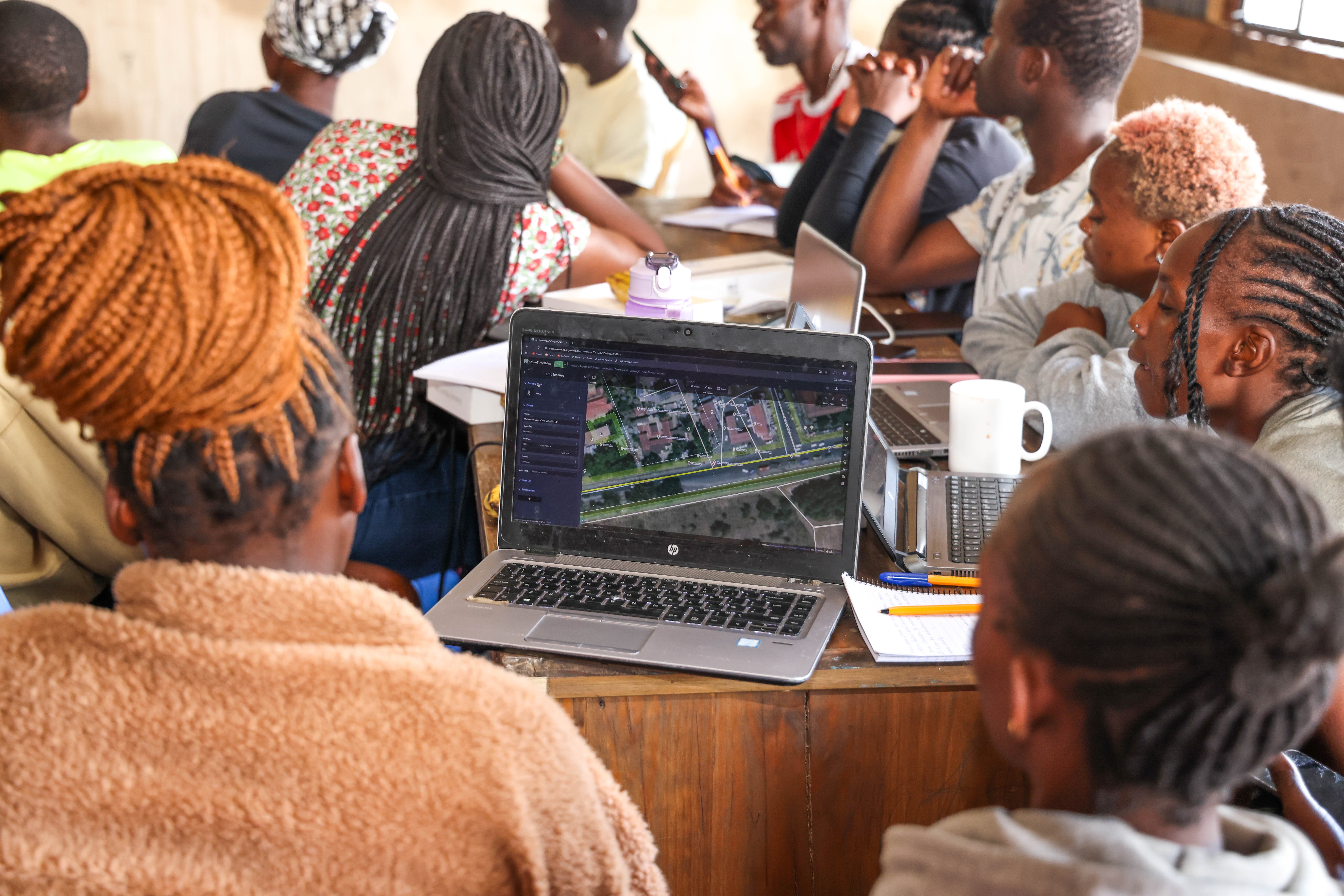
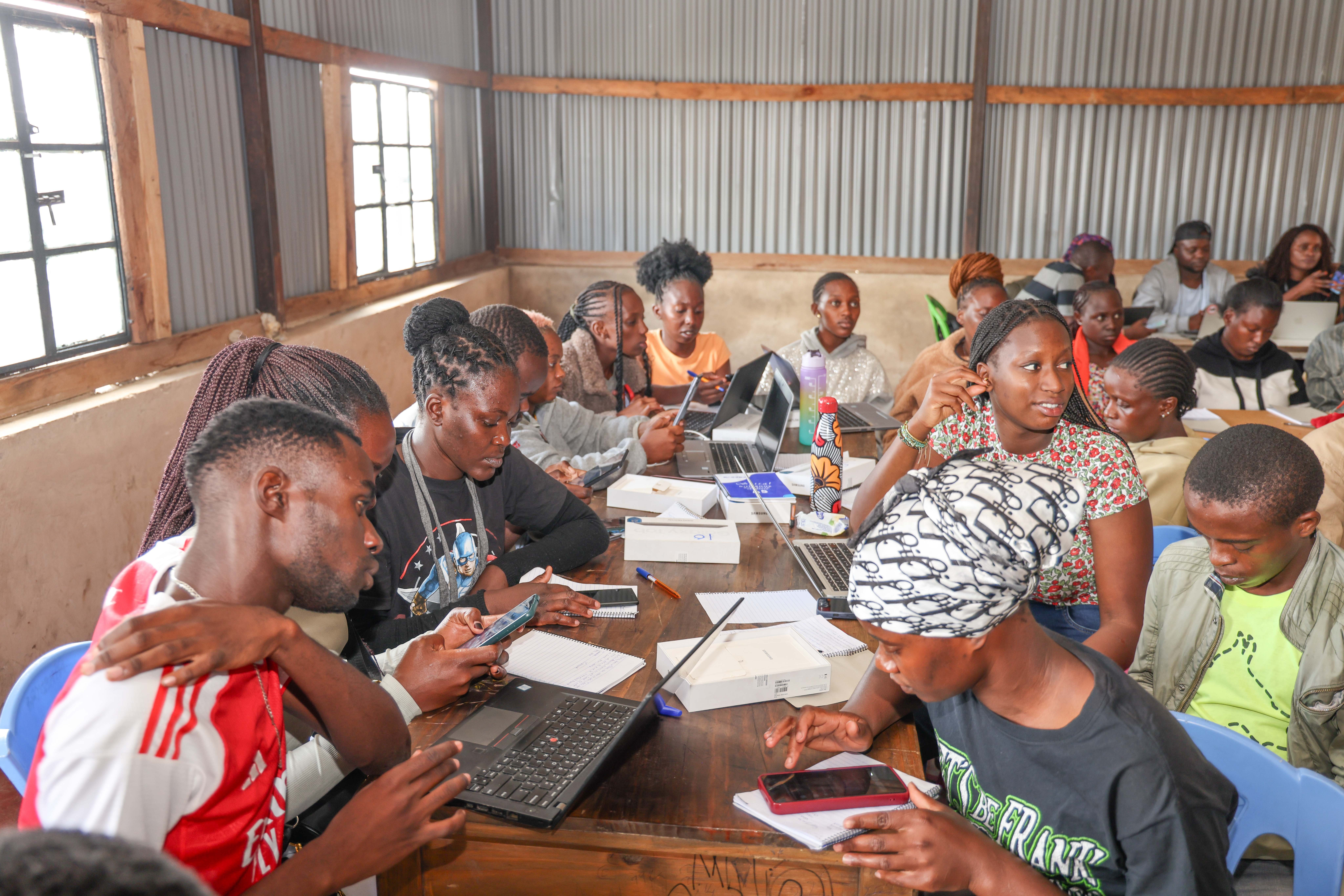
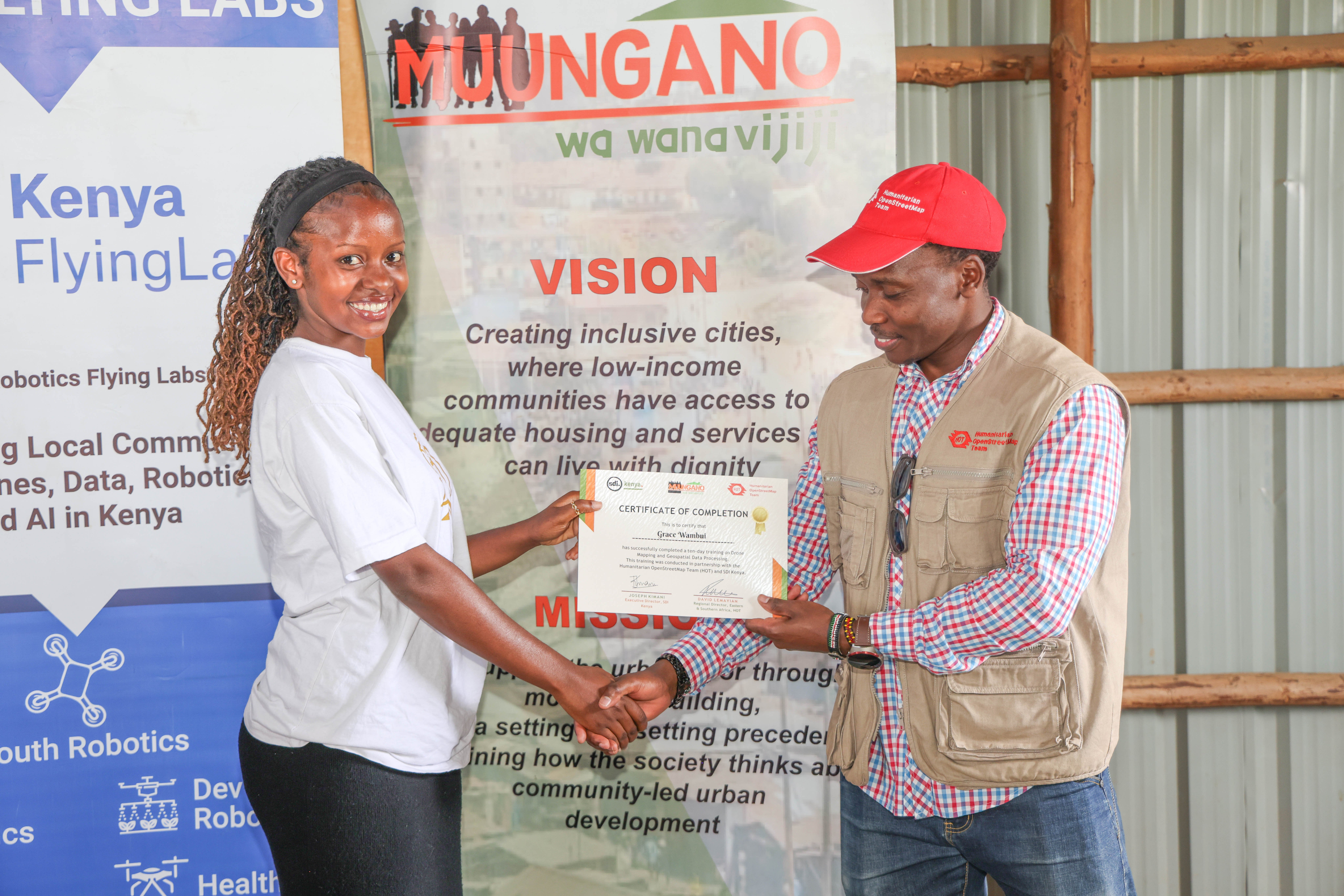
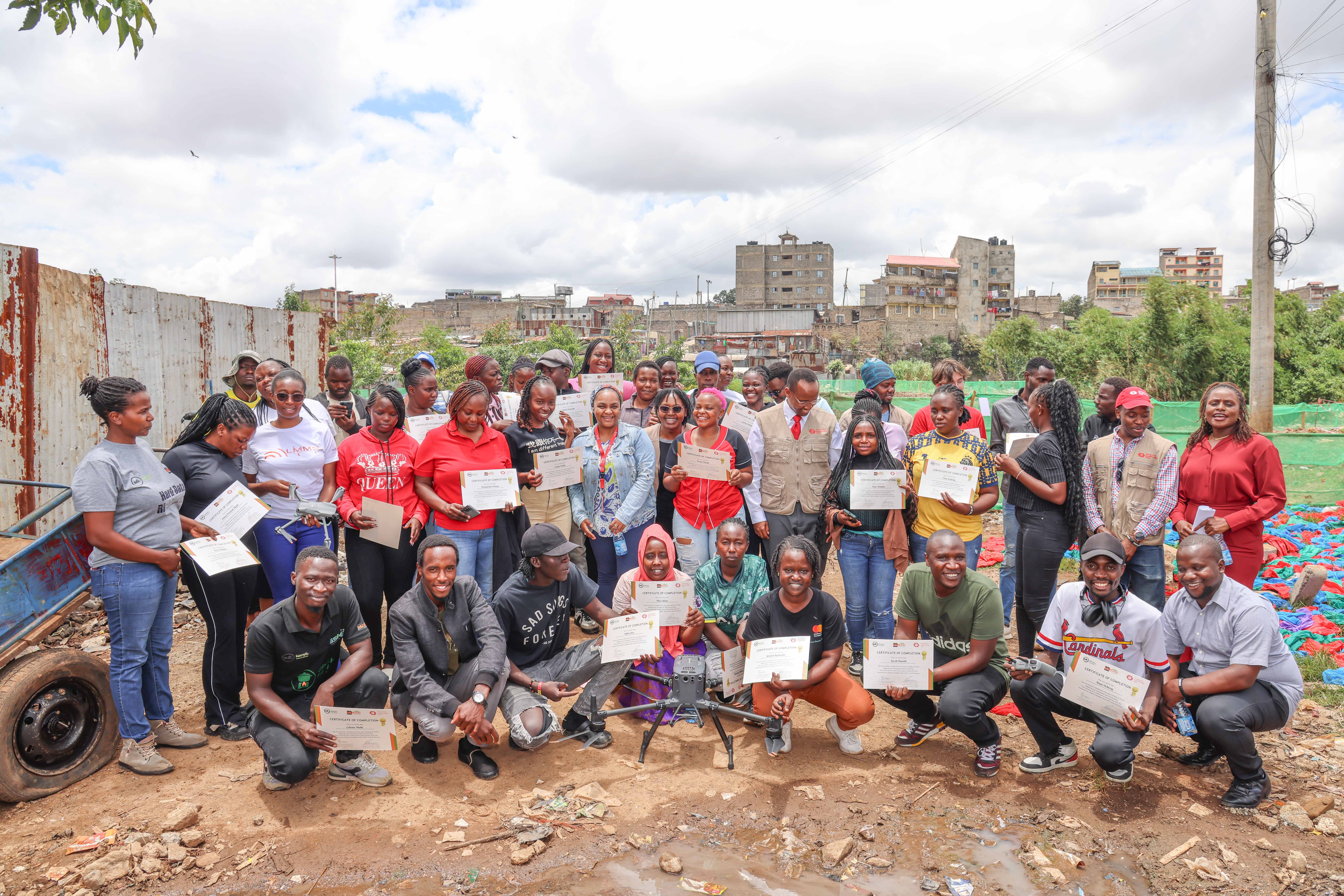
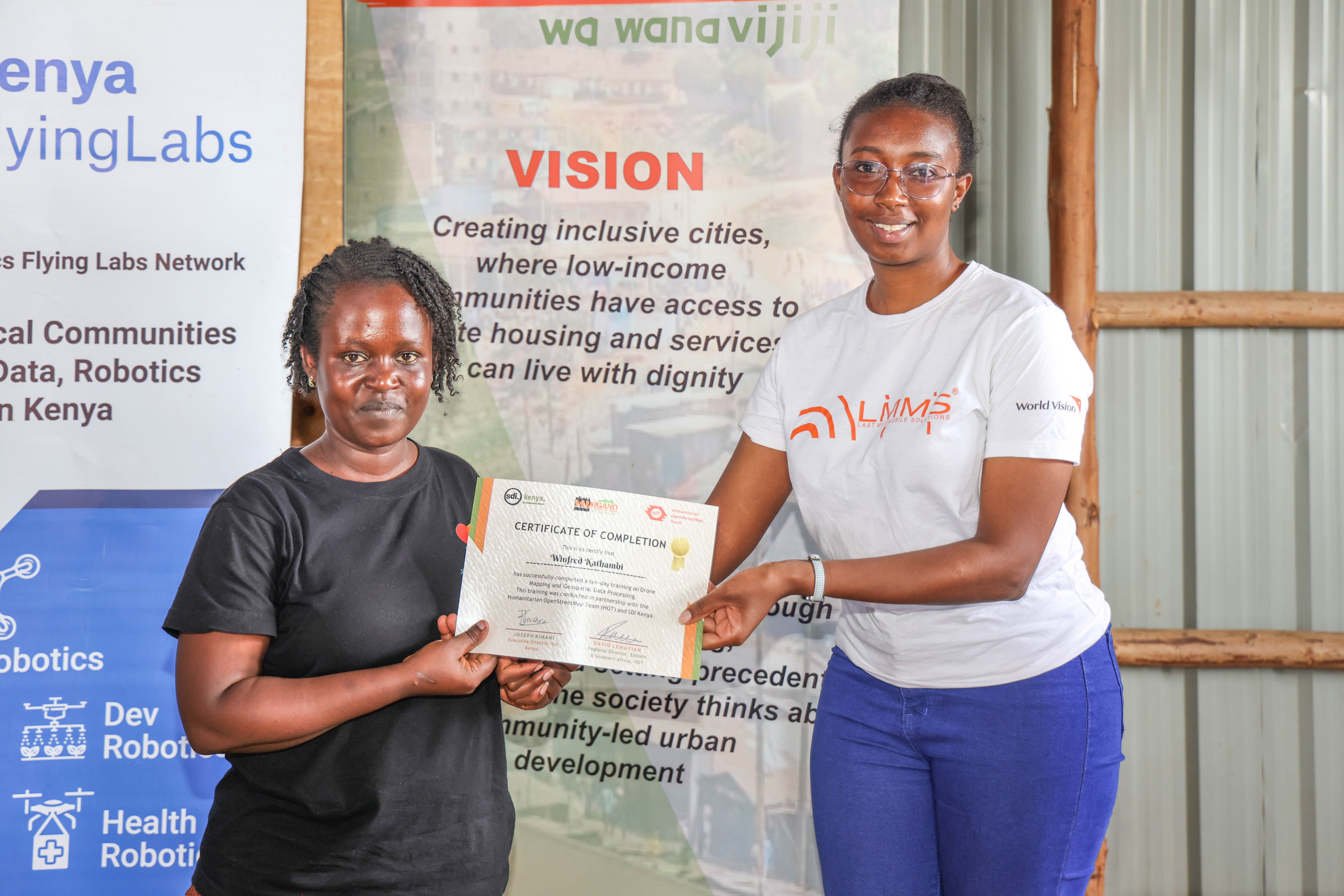
Across two cohorts 36 participants in the first (11–13 March) and 30 in the second (18–20 March) community youth from Mathare, Kariobangi, Gorogosho, and Dandora gained hands-on skills in GIS, remote sensing, and open geospatial tools through the Muungano wa Wanavijiji network.
Each participant completed at least two mapping tasks on the Tasking Manager using both ID Editor and JOSM. By the end of the training, participants left with the confidence and knowledge to use mobile mapping tools to document their own communities and to use that data for local advocacy.
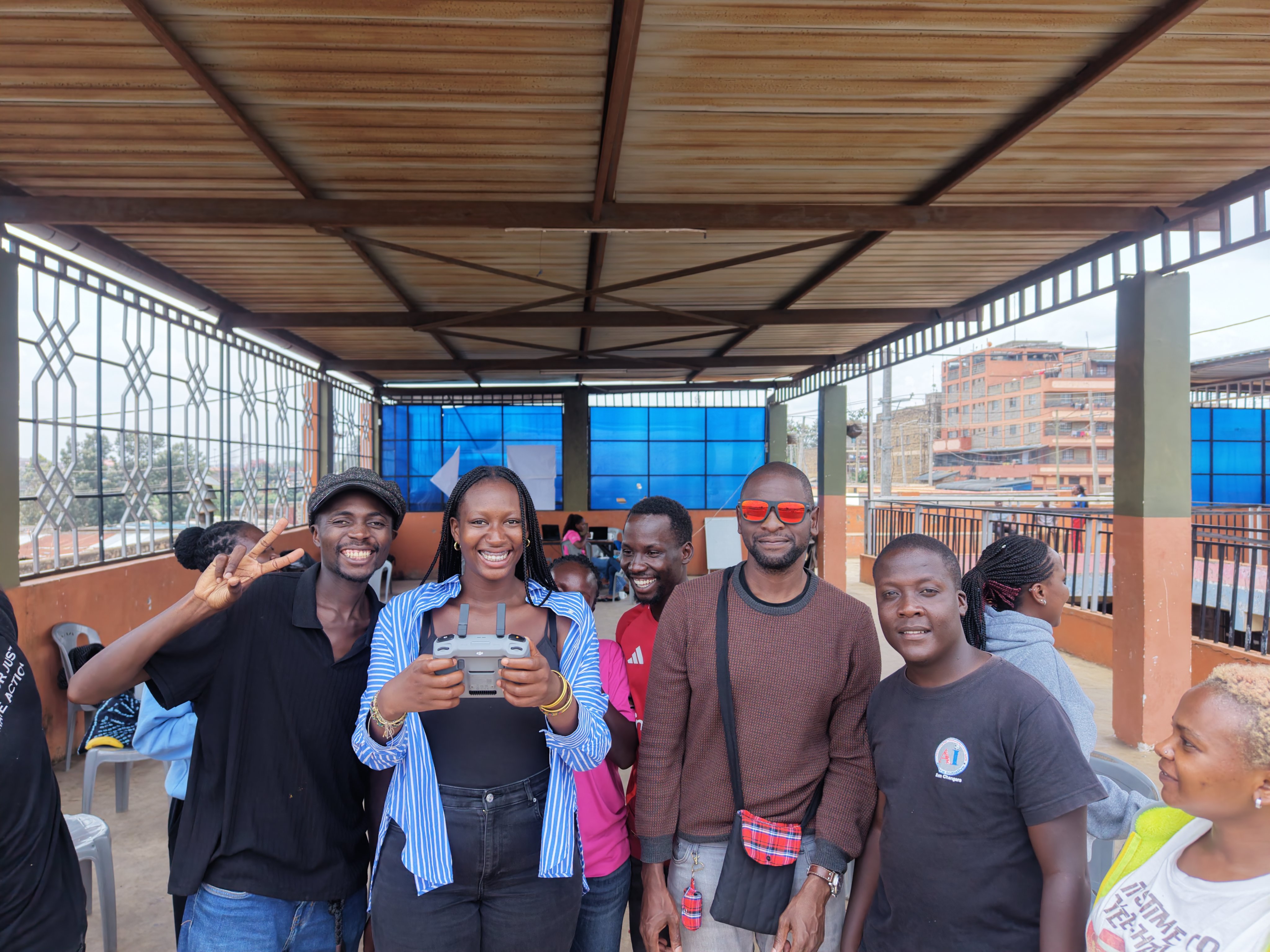
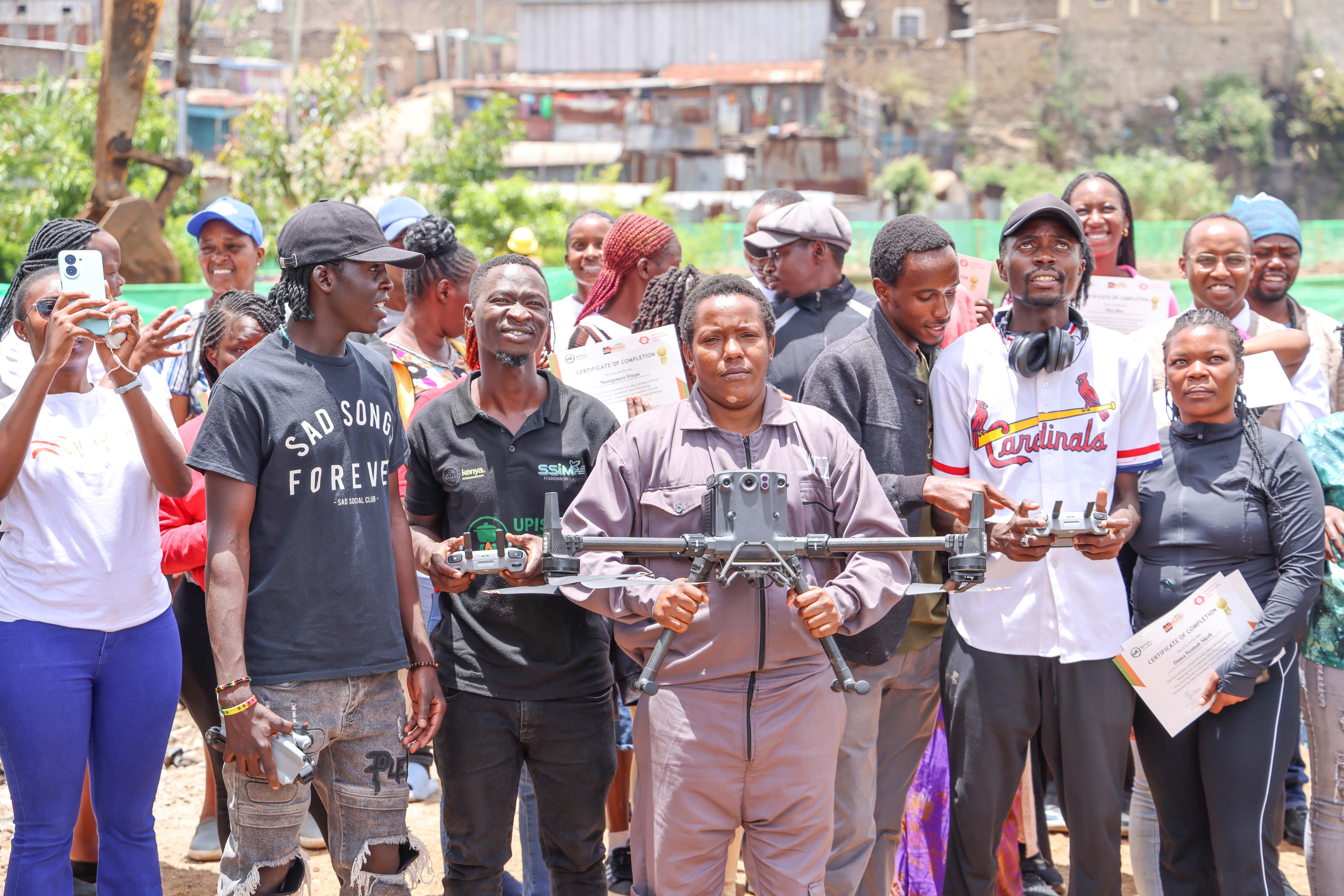

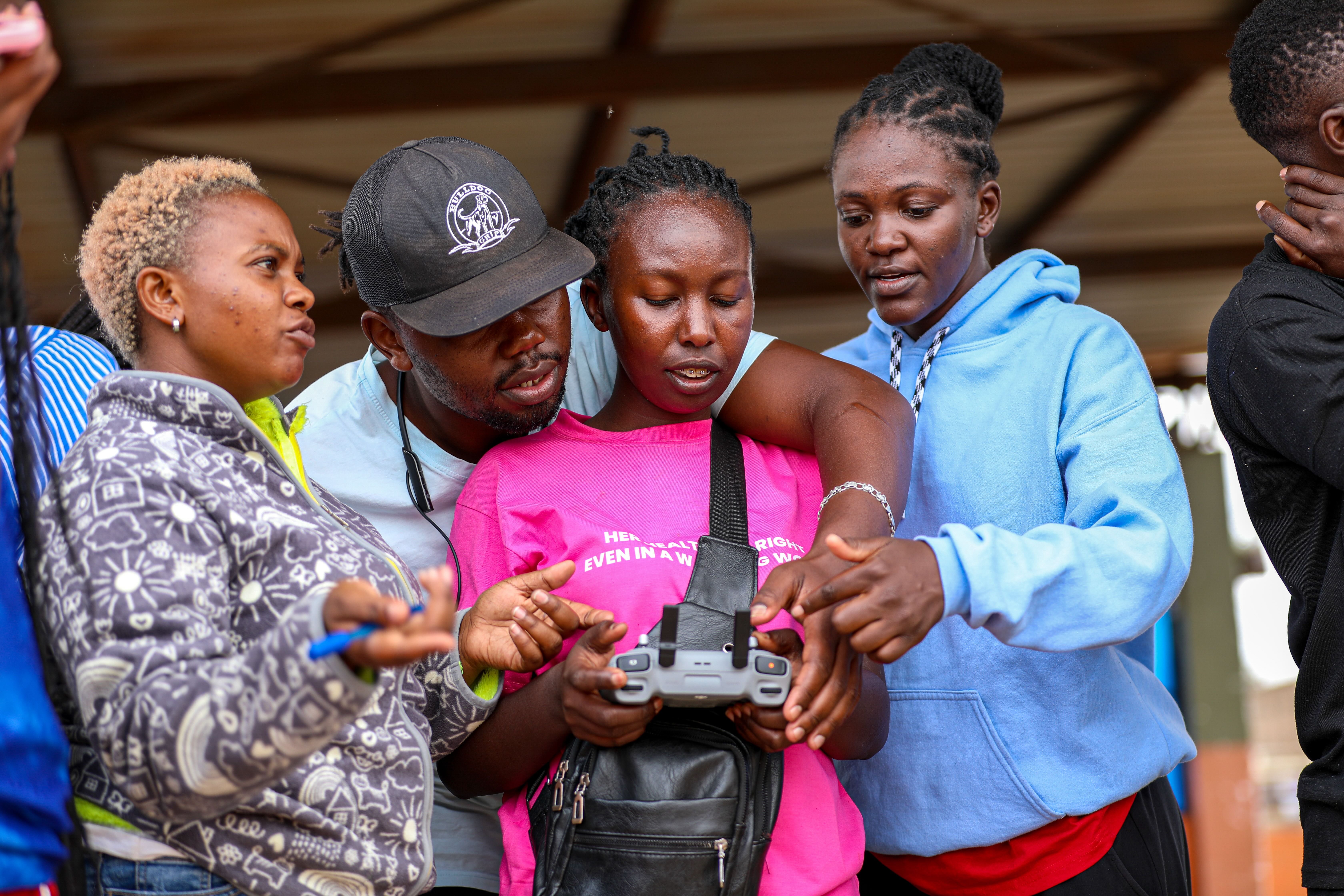
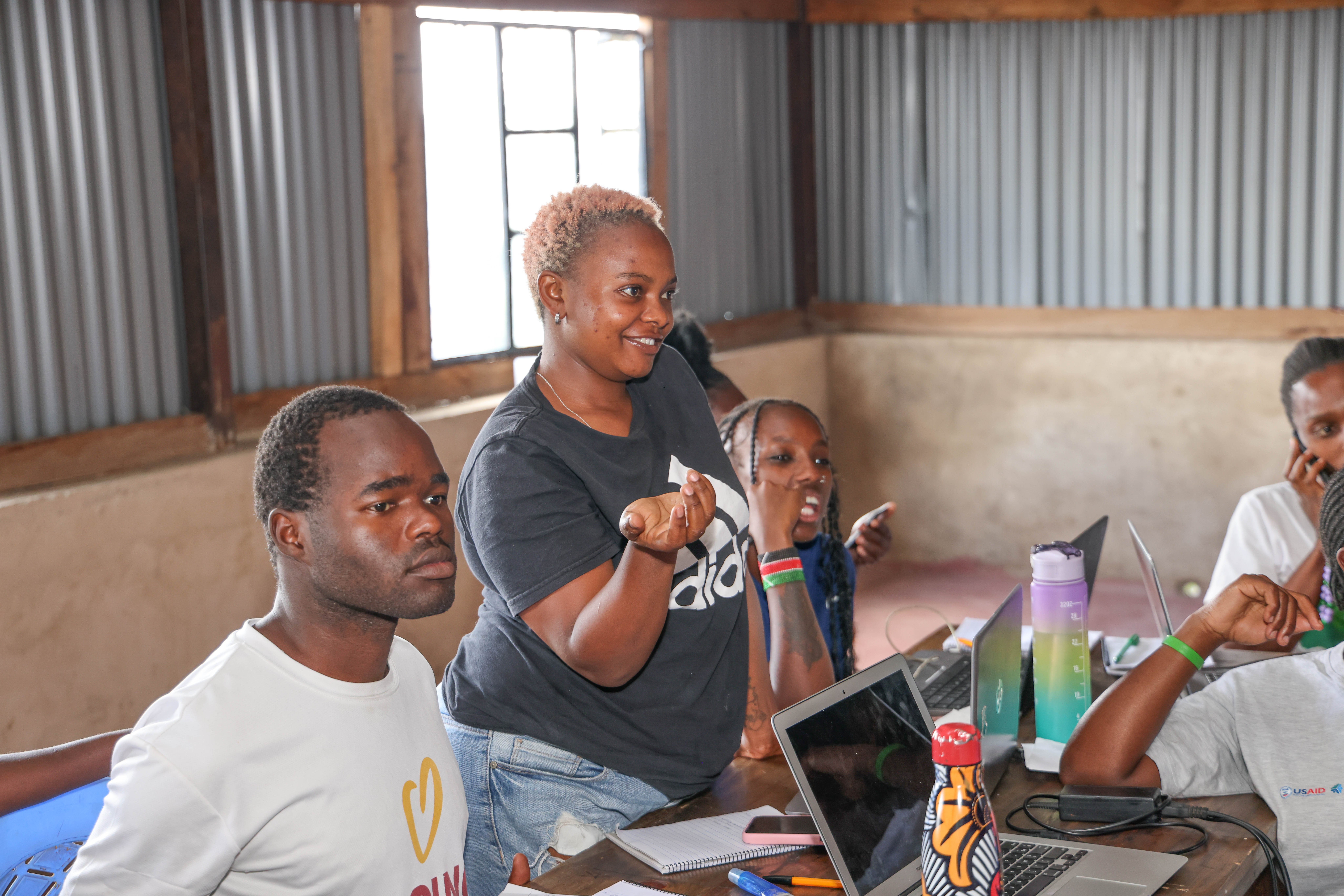
Vivian, pictured above. | Photo: HOT / SDI Kenya
"We feel like we are unseen, unspoken our issues are not valued. But now we have the skill to collect data and tell the real stories of the struggles we go through as young mothers."
Vivian — Muungano wa Wanavijiji youth, Mathare
Outcomes and impact
The project generates measurable results across three areas making communities visible, growing the use of geospatial data for local decisions, and leaving lasting mapping capacity in community hands.
- Settlements made visible. 33 Nairobi villages move from data-invisible to data-present, with open settlement profiles published to OpenStreetMap and OpenAerialMap accessible to communities, government partners, and researchers.
- Greater use of geospatial data. SDI Kenya, Muungano wa Wanavijiji, and government partners now have location data they can integrate into urban planning, disaster risk management, and slum upgrading decisions.
- Sustained local mapping capacity. SDI Kenya teams leave the project equipped to lead their own data collection independently. The Field Mapping Tasking Manager is fully handed over for ongoing, independent use.
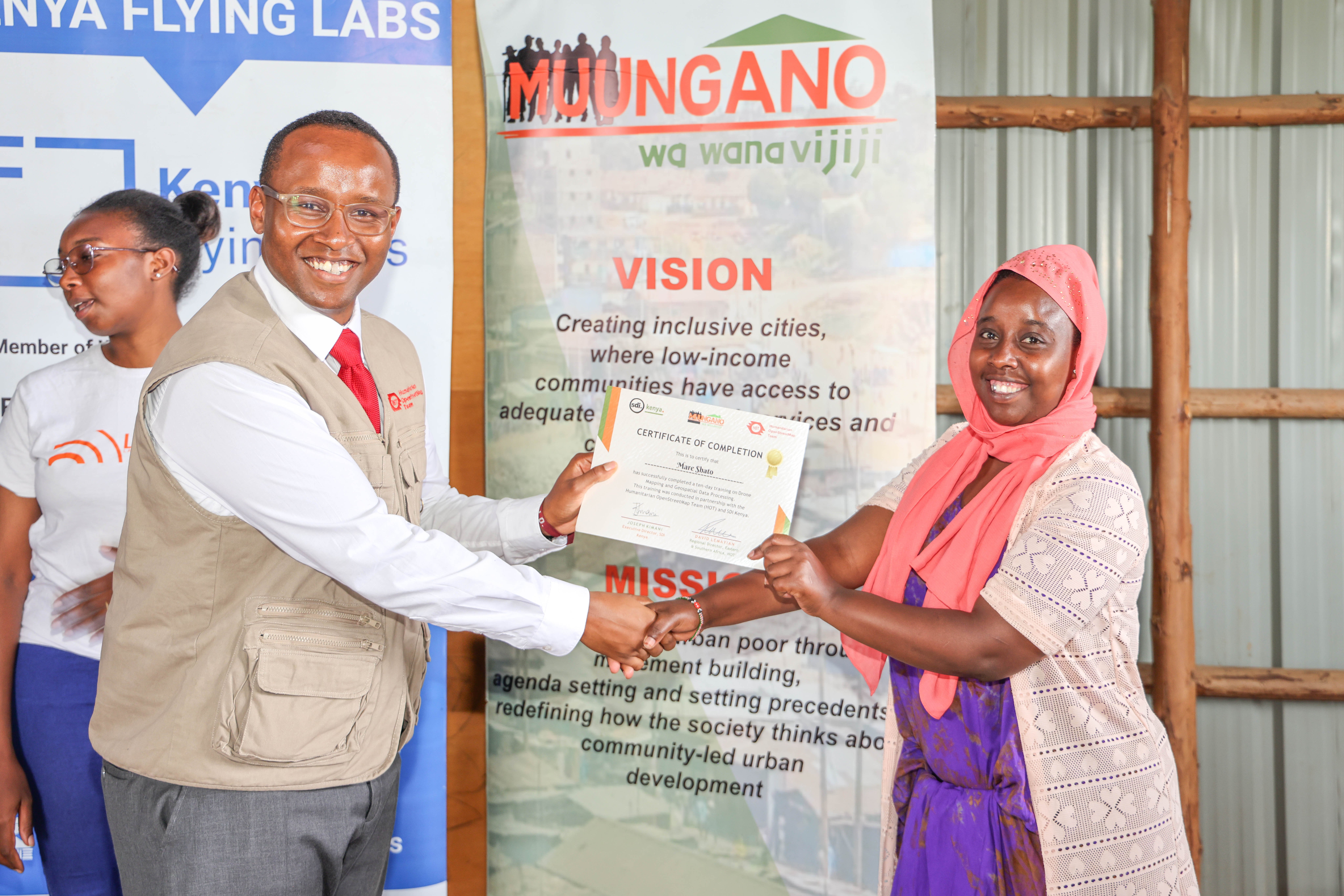
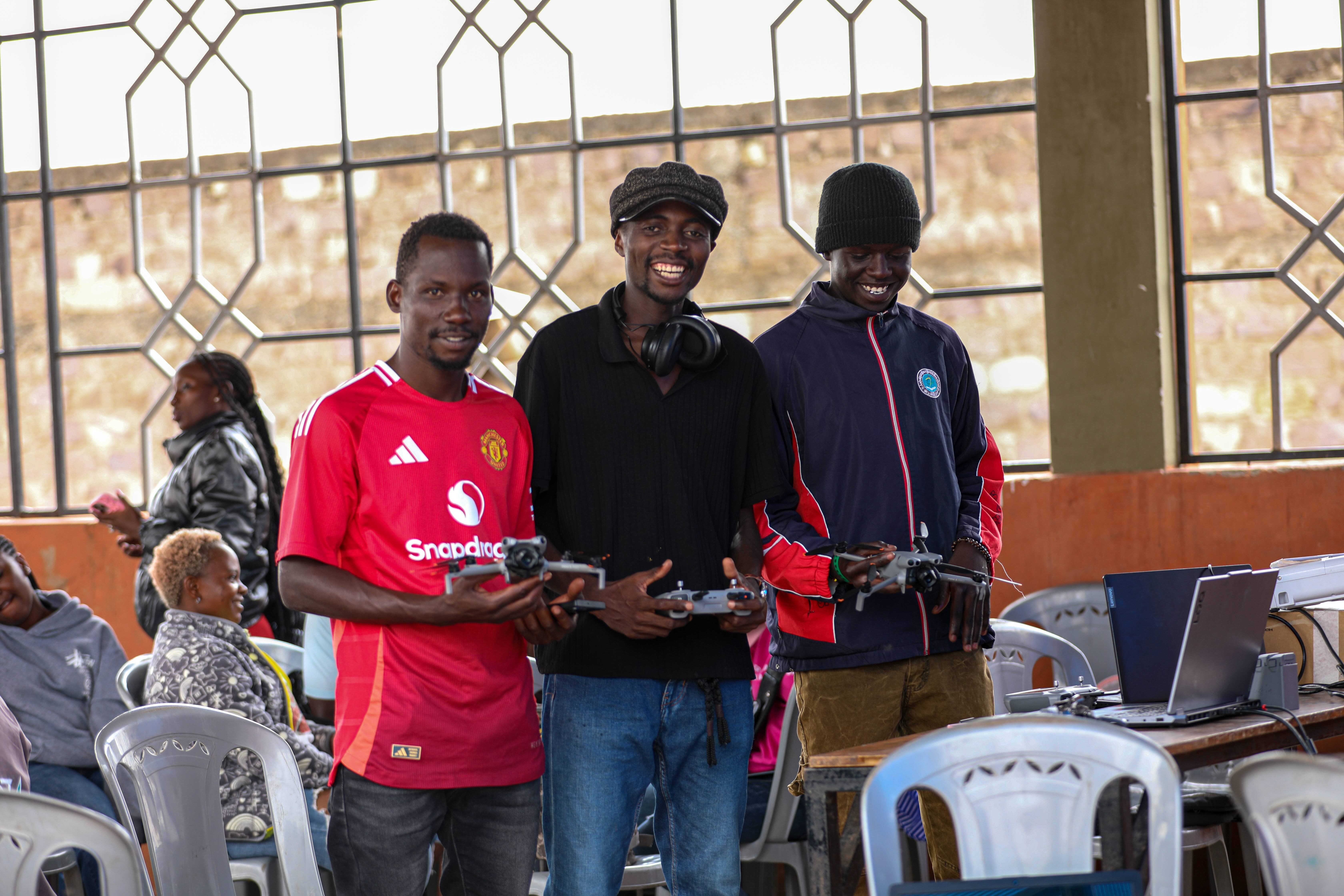
Allen Ochieng, pictured in the middle. | Photo: HOT / SDI Kenya
"I was a victim of floods. I saw how the neighbourhood was before and how it is now, but there wasn't a way I could show the world what happened. Now I can. I can create a difference because now I can do mapping and we can compare how it was and how it is now.
We have been taught to use several softwares and apps, including QGIS and OSM, which can even be used on the phone. Now I am skilled enough, I can't say that unemployment will be a big disaster for me. I can approach an institution, bring them online, map them, build their structures digitally and present to them so they can see themselves how the world sees them, rather than just on the ground level where they are used to."Allen Ochieng — Muungano wa Wanavijiji youth, Mathare
More from KYC Nairobi: data and imagery
Once the project closes, all open datasets will be published and freely accessible:
1) Settlement data — available on OpenStreetMap and HDX
2) Drone imagery — available on OpenAerialMap
Data will be posted here when ready. Watch this space.
This project was supported by GIZ through SDI Kenya's resilience and inclusion of the urban poor initiative, in partnership with Slum Dwellers International.