




Closure of Colombia's National Mapathon 2025
Publié par Mar Marín Villagrana, Céline Jacquin, Emilia Hernández • 28 janvier 2026
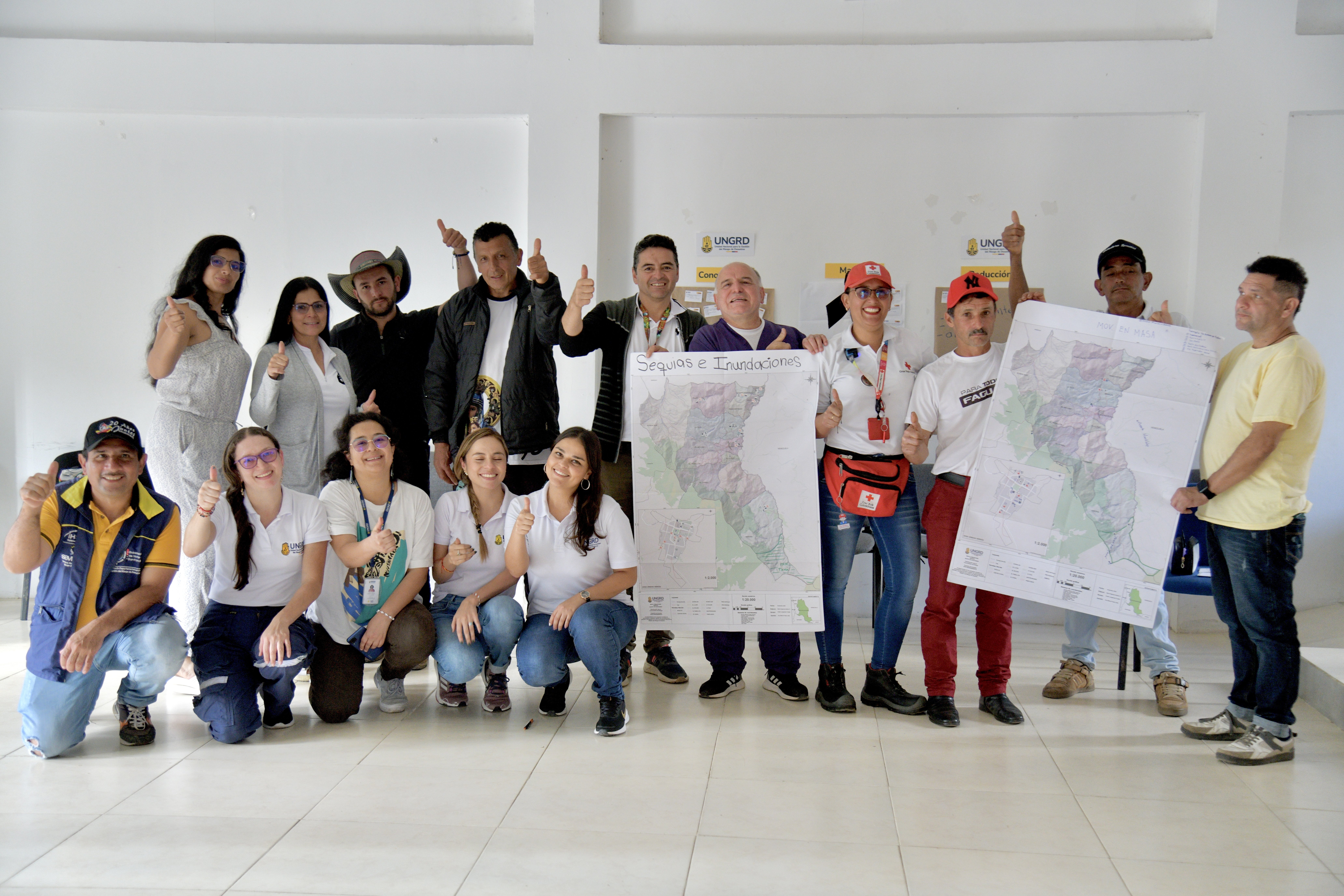
Learn about the Anticipatory National Mapathons
Latin America and the Caribbean is one of the regions most exposed to natural disasters, and Colombia is no exception. Its diverse geography faces multiple threats, from floods to landslides, while large rural and peripheral areas lack up-to-date geospatial data. The Anticipatory National Mapathons (MANA) were created as a low-cost, highly collaborative solution to anticipate risk by generating open maps created by and for communities.
The MANA methodology combines the participatory definition of priority areas with national authorities, the mobilization of mapping communities, technical training in open mapping, quality validation, and the delivery of data ready for use in public policy and territorial planning.
In Colombia, the National Mapathon is implemented through coordination between the National Unit for Disaster Risk Management (UNGRD), the HOT Open Mapping Hub for Latin America and the Caribbean, and the Agustín Codazzi Geographic Institute (IGAC), with leadership from youth collectives such as YouthMappers, SAGEMA, and TadeoMappers, as well as networks like the National Youth Environmental Network and the Youth Network for Disaster Risk Reduction.
First edition (2024)
The launch of the National Mapathon in Colombia emerged from an open dialogue between HOT and UNGRD, both aware of the bottleneck created by gaps in national cartography, particularly in rural and isolated areas, for the advancement of comprehensive risk management policy. While the institution sought to improve its approach by integrating communities into the design of risk management, the implementation of such efforts was hindered by limited knowledge at the national level regarding the configuration of these communities and access routes to reach them. As a result, it was jointly agreed to carry out a cartographic update, led by digital and student communities, of the first group of priority localities prior to the scheduled field visits and workshops.
In its first edition in 2024, the Colombia National Mapathon brought together 200 participants to map 26,111 buildings and 28 km of roads, prioritizing strategic areas for disaster risk management. The initiative became a space for learning and collective action that placed historically invisible territories on the map, laying the groundwork for a more ambitious 2025 edition. In addition, due to the timing of the event, it integrated an emergency activation in response to catastrophic flooding in the department of Chocó.
Second edition (2025): organizations and youth leadership
The Colombia National Mapathon 2025 took place between May 5 and June 27 through 12 virtual sessions. In addition to the organizing institutions, sponsorship from TomTom was added, providing 10 gift cards to the mappers with the highest contributions.
From the outset, the words of Ana Milena Prada Uribe, Deputy Director for Risk Knowledge at UNGRD, set the tone for the initiative:
“This support was essential to reach places that historically lacked data, creating a base map that will allow municipalities to reduce risk and update their planning instruments.”
Youth leadership once again played a key role. Sebastián Bravo, a young mapper and member of the organizing team, shared:
“We organized parallel meetings to learn and provide feedback, discovering that mapping has many applications. I am excited to see youth committed to open data so that communities can make decisions based on information they generate themselves.”
For Iván Darío Camacho Puerto from the Research and Foresight Directorate at IGAC, this effort goes beyond traditional geography:
“This allows communities to appropriate and generate knowledge, even in what we call ‘cybergeography,’ a space where new territorialities are created.”
Volunteer networks also made their voices heard. From the National Youth Environmental Network, Sebastián González Rivera, National General Coordinator, stated:
“As the largest youth environmental network in the country, we will continue contributing positively alongside you.”
Meanwhile, Juan Esteban Castrillón Casas, CEO of the Youth Network for Disaster Risk Reduction, emphasized:
“This second edition leaves us with lessons and commitments, with more than 600 young people in training.”
Céline Jacquin, LATAM Manager at HOT, highlighted that the long-term strategy for the National Mapathons is for them to be increasingly owned by the open mapping community, and for this community to gradually engage directly with national institutions to address urgent national data needs. This is achieved by involving youth—who will shape this community in the long term—in leadership roles within the National Mapathon. For this reason, it was especially important in this edition to involve student and volunteer networks, which are already emerging as leaders within this vast and diverse mapping community. Each year, their presence must grow stronger.
2025 Results
The achievements of this edition significantly exceeded those of the previous year:
- 255 participants
- 63,000 buildings mapped
- 439 km of roads, primarily rural
- 55 km of waterways
- 13 projects completed in the Tasking Manager, prioritized by UNGRD
Vulnerable and hard-to-reach areas were covered, including La Guajira and complex municipalities in Antioquia and Casanare. These areas, characterized by high population density and a large concentration of buildings, present additional challenges for mapping. The work carried out strengthens the base cartography needed for municipal risk management plans and emergency response strategies.
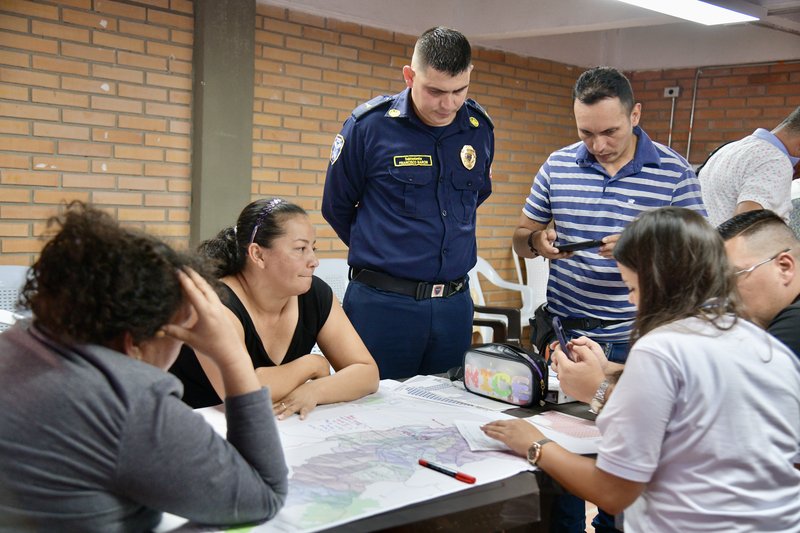
The data generated during Colombia's Mapathon is helping communities create their own maps.
Stories that inspire
The value of the Mapathon lies in the people who make it possible. Mila Herrera, a volunteer from Nicaragua and the mapper with the highest number of participations (as well as a key OpenStreetMap validator) during the citizen science exercise, shared:
“This work reflects the way HOT has been operating—building projects collectively, supporting one another, and sharing information. As a Nicaraguan, I know how difficult it is not to have information about your country—not knowing where streets, buildings, hills, or rivers are. I understand that need and the importance of having this type of information available to governments, private organizations, and citizens alike.”
Osvaldo Salazar, a highlighted mapper, agreed:
“We all collaborate together, whether or not it is our country, always with the goal of helping and reflecting on the map elements that are not mapped or visible in any other way. For me, the main thing is always to help and collaborate. In the process, I have also had the opportunity to meet people, their customs and habits, all very pleasant so far, and I hope to continue getting to know them.”
For Enrique Torres Moya, this was a transformative experience:
“For me, it was a new and very interesting experience to collaborate from my technical knowledge, but above all to support the community. I had never done this before, and it was very rewarding to contribute to something I normally could not do in the field. Being able to help from here is very useful. I learned so much—it was a very important experience for me, and I hope to continue contributing to the community.”
Lessons learned and next steps
- Youth and university participation from the organizational effort itself is a key driver for scaling and sustaining MANA, while also fostering professionalization.
- Data gaps represent opportunities to integrate citizen science into public policy.
- Strengthening validation and continuous monitoring is essential to ensure effective data use.
The Regional Anticipatory Macro Mapathon for Latin America is an initiative we are actively working toward, building on the combined experience of AmeriGEO in geospatial innovation, Earth observation, and risk analysis, and the Humanitarian OpenStreetMap Team’s proven collaboration with federal and local governments, universities, and organizations through large-scale participatory mapathons. Drawing on the lessons of the Annual National Anticipatory Mapathons (MANA) implemented between 2023 and 2025, this regional effort aims to scale open mapping and citizen science across Latin America to close critical data gaps, strengthen regional capacities, and generate high-quality open geospatial data that supports disaster risk management, climate resilience, and territorial planning through broad collaboration among institutions, academia, communities, and volunteers.
This is a call to public institutions with territorial presence and direct impact on the population, namely most secretariats and ministries, to assess the state of the cartography they use in their processes, identify existing gaps, and analyze how these limitations affect the fulfillment of their mission. It is also an invitation to imagine improvement pathways without being constrained by current capacity or resource limitations, and to explore how citizen science can help overcome them.
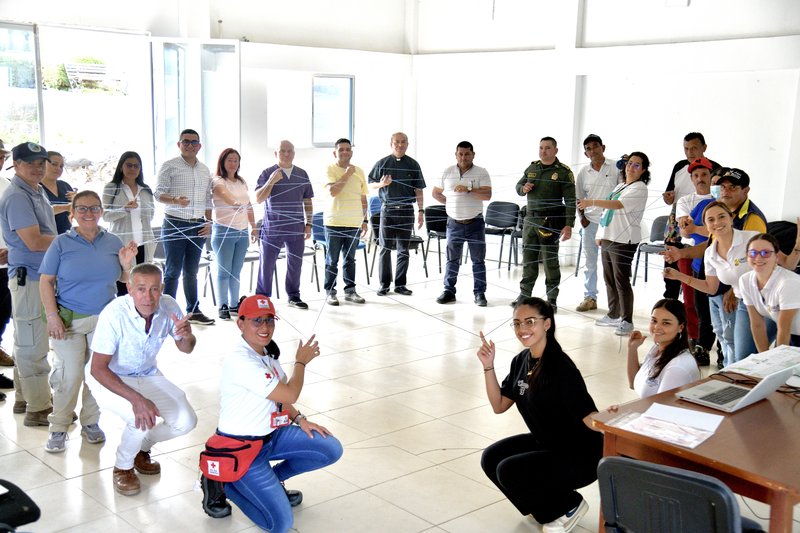
Community Mapping Workshop by the National Unit for Disaster Risk Management (UNGRD).
Share