




Staff Spotlight Series: Sam Colchester
Publié par Dana Gallaty • 27 janvier 2026
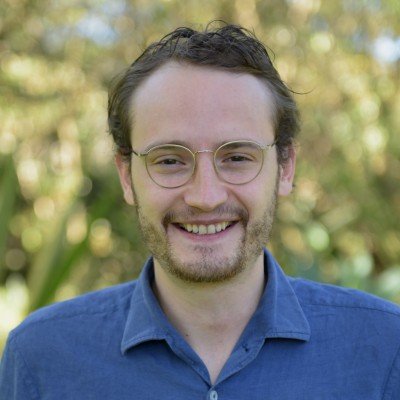
Tell us a bit about how your career/personal journey led you to HOT.
I was introduced to mapping (and was blown away by it) by my university’s resident cartographer Graeme Sandeman. I shortly after discovered Missing Maps and I was trained to edit OSM for the first time by Margaux Meslé in a small Edinburgh mapathon in 2015 (see image). I moved to London and continued attending Missing Maps events, which were being run by Pete Masters. Pete made a call for volunteers to help support the events and I put my hand up. My job was to find appropriate London venues for the monthly mapathons. The first venue I secured was a total flop and almost completely derailed the mapathon. The WiFi went down, there was standing room only for many and there wasn’t enough pizza. It could only get better, and so I continued supporting Missing Maps until COVID struck. At which point I was pulled into HOT to help run mapathons to match a surge in demand for virtual volunteering. I was astounded by the fact that I could get paid for doing what I love (and still am astounded 😀).
What’s the best thing about your colleagues?
There is an insane depth and diversity of skills at HOT, often in very niche areas, so I’m constantly learning from my colleagues. They’re also very willing to share these skills and great at transferring them, even though this is supposedly harder in a fully remote working context.
What are you most excited about for the future of HOT / OSM?
More open drone imagery. Have a look at the whole city of Freetown, Sierra Leone on OpenAerialMap right now, it’s been captured with 3cm drone imagery. SO much more can be mapped with that compared to the satellite imagery we’re used to using. 3cm drone imagery has 278 times higher resolution than the 50cm satellite imagery we typically use. We’re only just beginning to understand how much more detail can be added to OSM using drone imagery: The number of steps in a flight of stairs in a public alleyway; road and path surfaces; tiny footbridges over ditches and so on …
What is your current role at HOT, and how has it evolved?
Although I came into HOT to run mapathons this is something I only do occasionally now. Lately I’m particularly involved in supporting disaster response activities across HOT and the Open Mapping Hubs. Although OSM has been around for a long time now, disasters still occur in regions where there is very little to no OSM data. Rapid and coordinated mapping is therefore still needed to ensure that data gaps are filled to support organizations responding on the ground.
What is the most interesting project you've worked on here?
Apart from the Freetown drone mapping activities mentioned above, probably the Turkey/Syria Earthquake response in 2023. It was inspiring to see a strong local OSM community (Yer Çizenler) take the lead on the response. That we received testimonies from surgeons working on the ground about the importance of OSM to their work was also such an inspiration.
What are your goals in your role in the next 6-12 months?
As with all crowdsourcing projects the drop-off rate of new contributors is very high and the majority of contributions come from a very small minority of super active contributors. We call these very active contributors HOT’s core volunteers. They’re absolutely essential and we’re actively tracking the number of core volunteers at HOT as well as the percentage they represent compared to the total community. Over a year ago this was down at 1.7%, but it’s now hovering around 2% of the total pool of mappers. We’re aiming to drive that percentage even higher over the coming months and years with new changes to Tasking Manager such as introducing the Super Mapper level. But look out for more to come along these lines.
What are you reading right now?
We Will Not Be Saved: A memoir by Nemonte Nenquimo, describing her life as a member of the Waorani people in the Ecuadorian Amazon and her fight against environmental destruction caused by oil companies.
What’s your favorite way to spend a day off?
Doing nothing. A colleague once asked me what I get up to on my days off. I squirmed and struggled to give a clear answer. She said: “Hey you don’t need to justify your time, I’ve embraced doing absolutely nothing on my days off and I highly recommend it.” I’ve taken this advice right to heart!
Learn more about Sam here.
Photo courtesy of Sam Colchester
Share